
While in my last article I talked about the shortcomings of the norms among writers, it’s also worth examining unsavory trends among readership. Specifically, the barriers as to why reading is not as common as the educational pundits would like it to be. As is often the case with my articles, I’ll go over some less-discussed reasons as well as some of my personal anecdotes. Though to be fair, I can only offer my perspective.
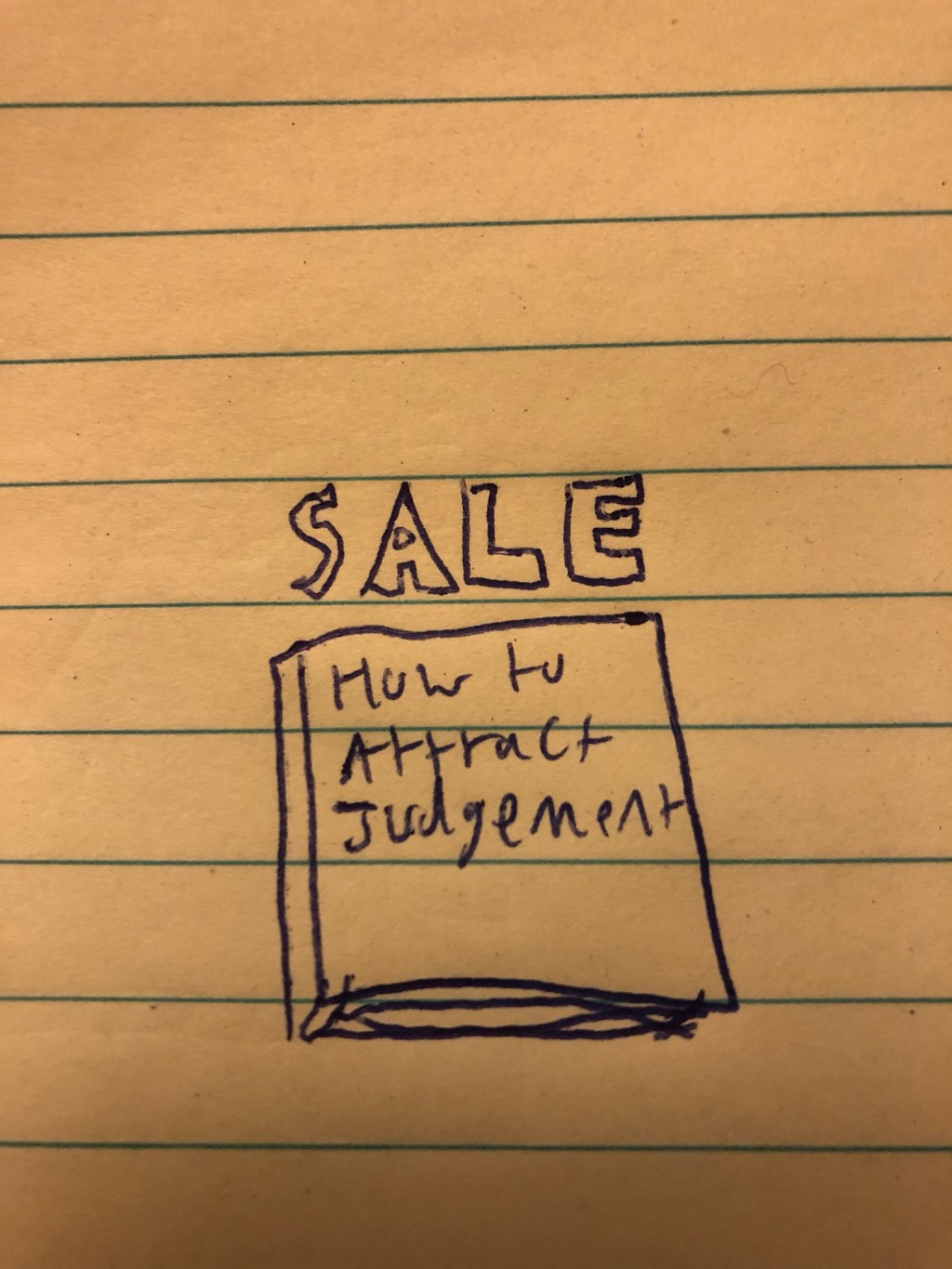
One unspoken barrier I have faced in my personal experience (an anecdote? Gasp!) has been the judgment of bookstore staff. Often times when purchasing a physical book from a brick-and-mortar store, I’ve been stared down by the cashier. The cashier’s eyes race up and down the cover of my book before returning their scornful gaze towards me, as if to say How dare you purchase a non-fiction book? while they ring me up. Other times the judgment is more vocal, often with the bookstore employee saying some generic “What a fine choice” before offering some unsolicited commentary, usually in a half-baked attempt at small talk that neither side really wanted. To be charitable, I’m sure that most of the employees mean well, however that doesn’t make the run-in any less unpleasant. While everyone is certainly entitled to their opinion, I cannot be the only customer that feels that they can do without the staff assessing the worthiness of their purchases. Who decided that they are the gatekeepers of taste? The aura of judgment has to have played some role in pushing the masses out of the stores and towards online purchases (to say nothing about distribution and cost). Amazon’s user interface doesn’t comment upon your choices, nor does it judge or critique you. It simply allows a transaction to occur. Bookstores would do well to rip a page out of the grocery store playbook; self-checkout lanes. This could help them win back customers (and cut down on staff, if you are so inclined) who have fled from uncomfortable interactions.
Another part of the problem is how reading as an activity is marketed and presented in pop culture. It’s presented as an almost exclusively feminine activity, and while I certainly understand and support the female readership base, this is done to the near-exclusion of men (read: fifty percent of the population). This holds extra true for group-centric activities; book clubs are portrayed as exclusively female, with the rule-proving exception of a commercial with Baker Mayfield hosting a fictious book club. Again, I’m not against women’s literature and activities surrounding it; to the contrary I support it. However, reading can-and should-be marketed to men too. The lack of community hurts male readership (and readership in general). Personally (there I go again with the anecdotes!) it has been difficult to find other male readers interested in the genres I read, doubly so in my own age bracket.
Another barrier is that when reading is often brought up as a hobby, it is often along the lines of Oh, you like to read? followed with a quick recitation of names and titles. Usually this interaction does not go very far because it can be frustratingly difficult to find another reader of a genre you like in the wild. Again, the lack of community rears it’s ugly head.
One potential solution to the problem of low male readership is to present reading as a means to an end, as reductionist as that may be. My personal reading had a noticeable uptick three years ago when I failed in a promotion interview, partly due to my lack of readership was brought up. My lack of intense reading had held me back. Since then, I have viciously increased my reading, because I finally had a purpose to do so, rather than it being something I ought to do.
Speaking of ought to’s, the limited pool of male readership is constantly bombarded with every social pundits “List of Required Reading for Men”, which offers a judgmental tone to those men who don’t meet this imaginary standard. I tried on three separate occasions in my twenties to get through Adam Smith’s The Wealth of Nations, solely because it was a book that I felt I ought to read. I usually quit around the 200-page marker (after all, it is a dense book on a dry subject). It’s okay to explore a range of topics, and it’s also okay to quit a book if an author just doesn’t hold your interest or attention. Disliking Daniel Kahneman or Malcom Gladwell doesn’t make you less of a man or less of a reader.
The social stigma against using the public library is another toxic holdover from the past that needs to be retired. When someone mentions “one who frequents the library”, a lot of mental images pop-up, many of them revolve around being poor. This is not only demeaning-and often inaccurate-but it’s also completely unnecessary. Besides the argument of you pay for it through taxes, so use it (an argument I fully support), it comes from another place of judgment. I borrow books from my local public library all the time; it serves as a great way to test out an author before buying. Setting money completely aside, the window of time has forced me in the past to read/complete the book instead of letting it collect dust on my coffee table (guilty as charged). While this is anecdotal, the library has one distinct advantage over the bookstore that is difficult to quantify; libraries (in my experience) have often been far less judgmental of reader’s taste than bookstores.
So, to tally, reading has a marketing problem, a lack-of-community problem, and a judgment problem. Fortunately, these are not unsolvable problems, we just have to be willing to admit that they are problems and be willing to talk about them.
 Home Page