
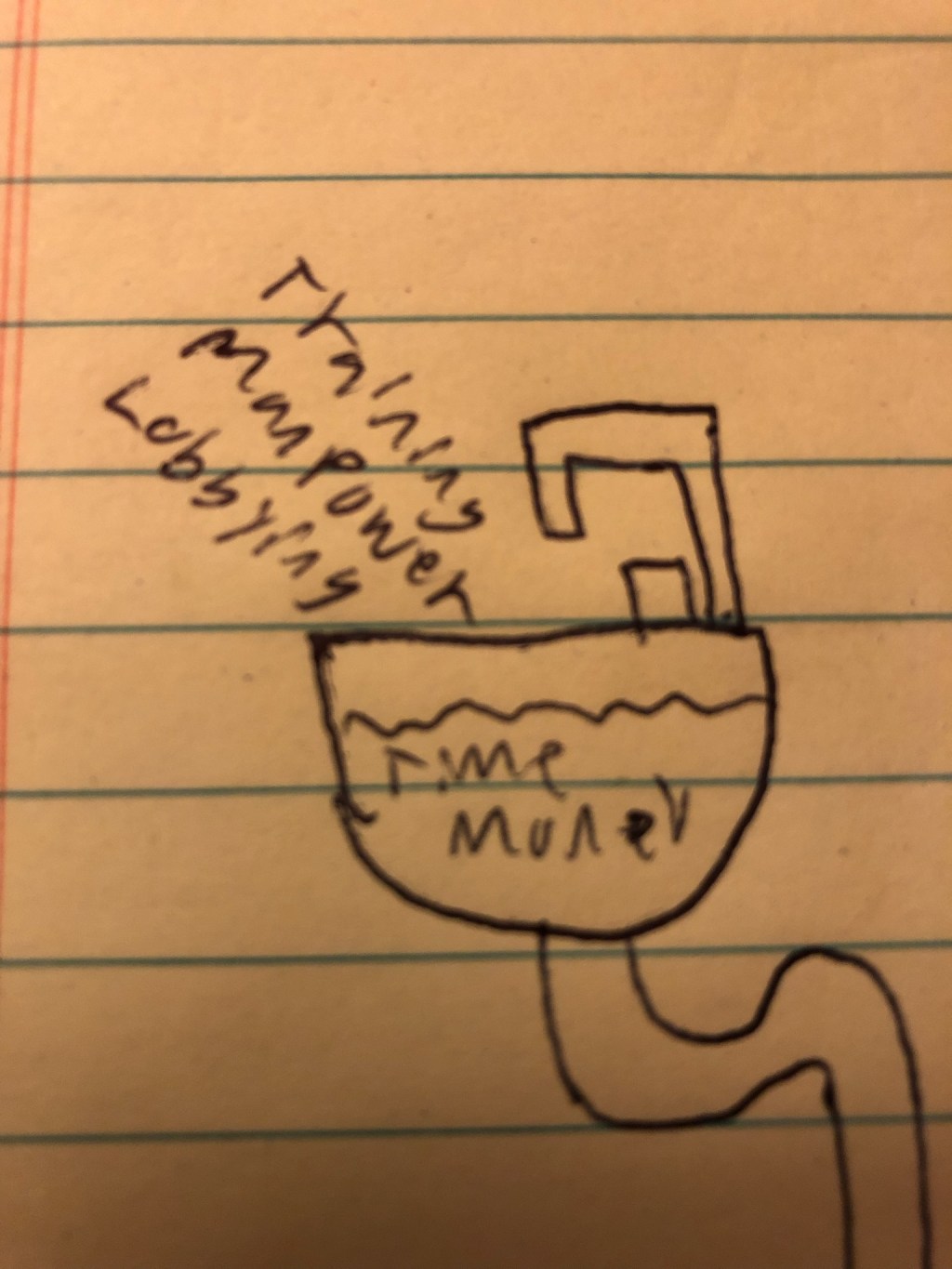
A close friend and I text nearly every day, and when we do, a favorite pastime is to spot holes in each other’s reasoning. It’s not uncommon for accusations of using the Strawman fallacy, appeal to authority, false dichotomies and so on. Over time, this has made both my friend and I vastly better at building solid arguments, with the added advantage of the exercise being fun in a nerdy type of way. However, over the years one sort of logical fallacy has overwhelmingly become my favorite to spot in the wild, and that is the sunk cost fallacy.
Sunk cost fallacy is essentially committing to a sub-optimal course because of the time, money, manpower, supplies or other resources spent on the process getting to the current situation. What it cost to arrive to your situation is irrelevant. These costs have already been paid and cannot be recovered; they are sunk costs. The logical loophole is alarmingly common in the high-pressure realms of business and politics, but it’s also commonly used by the ordinary citizen as well. Whenever one hears the phrase Well, we already came this far, no sense in turning back now or some variant of it, you know the sunk cost fallacy is in effect. In essence, the sunk cost fallacy is a special type of denial.
Corporations will frequently commit to a new expansion or project that a lot of money has already been poured into, even when it’s no longer the winning play. The practice is so common that PayPal’s withdrawal from building a new site in North Carolina in 2016 is seen as a rarity. The logical fallacy is so common in business because sadly many executives fear that changing direction will make the shareholders, employees, and customers view them as weak or incompetent. Thus, corporations will trudge onward down a path that many people involved know is a poor choice. Other times, the sunk cost fallacy is alive and well due to the people involved being too vested in the unprofitable venture-be it emotionally or financially-that they are blinded to the fact that an objective outsider could easily see. After all, nobody likes to admit defeat. Therefore, whether we like it or not, the sunk cost fallacy is often directly responsible for wasting vast amounts of investor capital and human labor.
Sports is a common example of the sunk cost fallacy playing out. Many times in the NFL, a team will spend an ungodly amount of money for a quarterback in free agency (this isn’t an athletes are overpaid rant, they are compensated based on the value they generate). Often, like the case this year with Russell Wilson, the quarterback will retain his starting spot simply because of the money the team has paid him regardless of if he is actually performing or not. The large contract is the sunk cost, and the Broncos in this case would likely be better served seeing what a younger-and cheaper-quarterback currently riding the bench could accomplish. Sunk cost fallacy is capping the opportunities of others.
Tragically, the sunk cost fallacy is seen in military leadership as well. President Biden faced nearly universal backlash in August 2021 for withdrawing the final remaining US forces out of Afghanistan; it had been nearly twenty years since the invasion and occupation of Afghanistan had started. Large price tags and casualty counts were strewn across the tickers of nearly every news channel of the US. However, the fault lies little on President Biden; there were three prior presidents (both parties represented, before I get accused of bias) that committed to staying in Afghanistan despite evidence that Afghanistan was likely a lost cause. Again, nobody likes to admit defeat. The loss of thousands of American lives and billions of dollars could have been avoided, had our elected officials avoided the sunk cost fallacy.
Before we collectively point the finger at CEOs and Presidents for committing the mental error of the sunk cost fallacy, it is best to examine our own lives for its ugly existence (after all, the famed psychologist Jordan B. Peterson advises in his book 12 Rules for Life to clean your room before criticizing the rest of the world). As we near the New Year, inevitably people will start crash dieting again (until St. Patrick’s Day, then it’ll be back to business as usual). The resolutioner will start by making all of the right nutrition choices, but then they’ll have pizza during a work party. The consumption of a slice or two of pizza causes many people to think Well, I already had pizza, so this day is ruined, so it’s time to indulge and then continue their poor eating habits. In a very direct way, sunk cost fallacy has contributed to the poor health of Americans.
Relationships are another everyday example of the sunk cost fallacy. It’s common for people to stay in relationships that have run their course, simply because of the time already spent in the relationship. Time is the one asset that is truly finite; nobody knows how much of it they truly have, and time spent can never be recovered; time lost is truly a sunk cost. Nobody likes to public admit that they were wrong, so yet they remain in the unhappy relationship. The sunk cost fallacy is undoubtedly a part of many bad marriages in America.
The sunk cost fallacy has ruined lives and poured untold billions of dollars down the drain; it is truly one of the most destructive lines of thinking we humans have. This line of thinking is also destructive because it is so subtle, unlike overtly blatant harmful ideologies such as racism and sexism. The good thing though, is that once it has pointed out and we fully accept the fallacy we are committing, we can-in most cases- change course to a better path. Admitting when you’re wrong or made a strategic mistake isn’t a sign of weakness, in fact it is endearing. Don’t believe me that leaders admitting fault is a positive? Pick up nearly any book that Simon Sinek or Jocko Willink have written (as an aside, they are both fantastic authors and their books are totally worth a read). We can combat the sunk cost fallacy and mitigate its harmful effects; we just have to be willing to admit that we were wrong.
 Home Page