
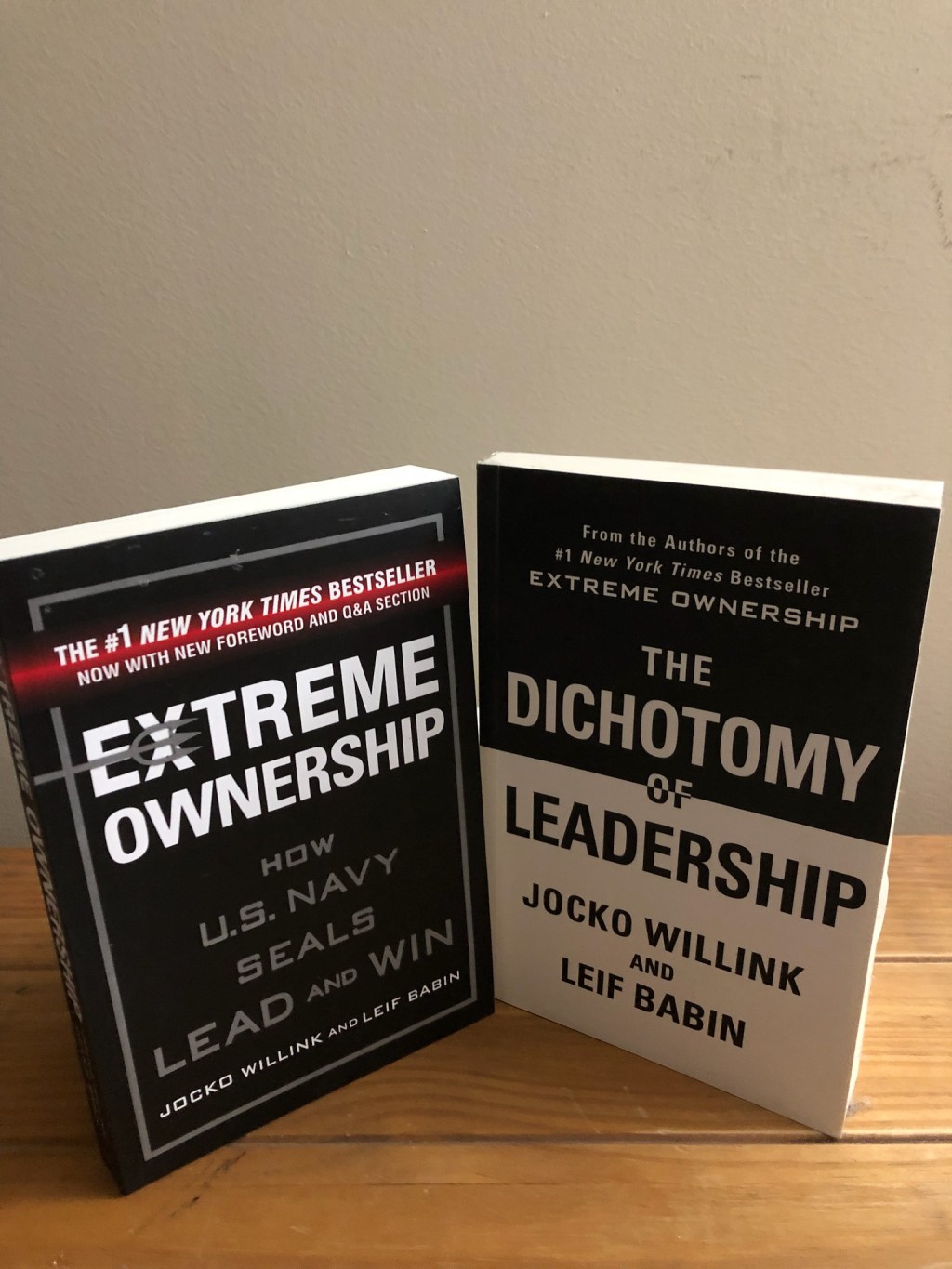
Over the last few years, I’ve started reading, and re-reading, Jocko Willink’s books Extreme Ownership and The Dichotomy of Leadership. Both of which are chock-full of wisdom earned from experience in high=pressure situations. The best part about most of his advice is how well it translates to other applications, industries and walks of life.
For the uninformed, Jocko Willink was the leader of a Navy SEAL platoon in Iraq during the height of the US Occupation in the mid-to-late 2000’s. Hs two aforementioned books share stories of his missions in Iraq, and the lessons he learned along the way. After his retirement from the military in 2010, he started a management consulting firm called Echelon Front where provides coaching services to executives. Later, he branched out into writing and podcasting.
One story Willink tells from Extreme Ownership is when his superiors, who were remote, were asking a lot of questions about relatively routine and obvious things. The questions eventually became grating to Willink, however instead of getting mad or frustrated with the situation he decided to take ownership. Essentially, he accepted that it was his fault that his bosses were asking these ridiculous questions because he wasn’t being proactive enough in his communications with them, and they were in the dark because of his lack of initiative with information sharing. Willink took ownership and started feeding information upwards before the questions rained down. This lesson truly spoke to me because I was going through something similar (albeit with no life-or-death stakes); I had a new boss who constantly asked me about the preparedness of the suite I was working in. I felt many of these questions were of a No shit, Sherlock variety and they grew tiresome after awhile. Taking Willink’s advice, I included with each group text message I sent the current status of the suite. This eventually built some level of trust and credibility.
Willink talks about in The Dichotomy of Leadership when to show emotion and when to be objective. He spills a lot of wisdom on this topic, however his take-home point is that humans do not follow robots. Showing emotion and humanity-appropriate to the context-is necessary in order for people to trust you. I was criticized a lot-by both peers and managers-years ago for not being expressive enough, two of my old friends from that job even joked about my robotic nature. Another colleague was blatant with me on this front, saying that he was suspicious of me because my lack of reaction to bad outcomes and my lack of profanity. Since then, I have realized that it is okay-again, context dependent-to show frustration or disappointment to outcomes (outcomes, not people!) and the occasional f-bomb isn’t as much of a taboo as we’ve been conditioned to believe.
In The Dichotomy of Leadership, Willink talks about a training exercise with a well-respected and competent sergeant named Big Mike. Big Mike was “killed” in the combat exercise, and the rest of his team collectively started to panic; Big Mike was the one who gave orders and kept morale up. Soon, Big Mike’s team was turning to sheer panic and they were not learning anything from the exercise. Willink radios in and says that Big Mike was not really “dead” and that it was a “flesh wound”, thus allowing his team to finish the exercise. The point Willink was driving home in this story is that training needs to be difficult to challenge people to grow, but if it is too hard, then learning will stop and the exercise will be wasted. I have used this lesson in my job since then when I’ve been tasked with training new people. I frequently try to drive in the fundamental concepts by asking questions that force them to reveal their comprehension. I’ve found a few times that I was stumping my trainees, which is not the goal. When I have found that someone is stumped, that’s a sign that I need to tone down the difficulty of my questions. Jocko Willink has made me a better trainer.
Another story from The Dichotomy of Leadership is when Willink was tasked with clearing a building. The SEALs formed a line before they breached each room. The SEAL at the front of the line was too far in the weeds to assess the entire situation, as his focus needed to be on clearing the room. The SEAL at the end of the line was too far removed from what was happening to accurately assess the situation. Therefore, Willink revealed that the ideal spot for him to be in was near the center of the line, as it balanced the two extremes. Admittedly, as someone who was recently promoted into a supervisory job, this is a lesson that I’ve struggled with implementing. Forgive me, Mr. Willink.
These are just the most poignant lessons from Willink’s books that have been the most useful to me thus far. Similar to Bruce Lee’s approach to martial arts, the important thing is that you take what you can use and implement. This is another reason why re-reading books is important; you’ll likely gather lessons that are now useful to you that weren’t in the past. Jocko Willink’s books have been highly influential to many people, and I hope that he continues writing; the world needs more of his wisdom.
 Home Page