
During my last semester of college, a mere three weeks away from walking across the stage, a chemistry professor of mine drop a gold nugget of wisdom. The piece of advice she shared was so simple, yet profound. It was something that I had intellectually known for quite some time up until that point, but never applied or deeply pondered. But first, some context.
I was sitting in a class that was notorious for having a high failure rate; the most commonly discussed statistic was a 1-in-3 failure rate among students who attempt the course for the first time. Given the way the class roster had diminished over the semester, I didn’t question that statistic. To make matters worse, I had come into the course after a year away from the material, so suffice it to say that the odds really were not on my side.
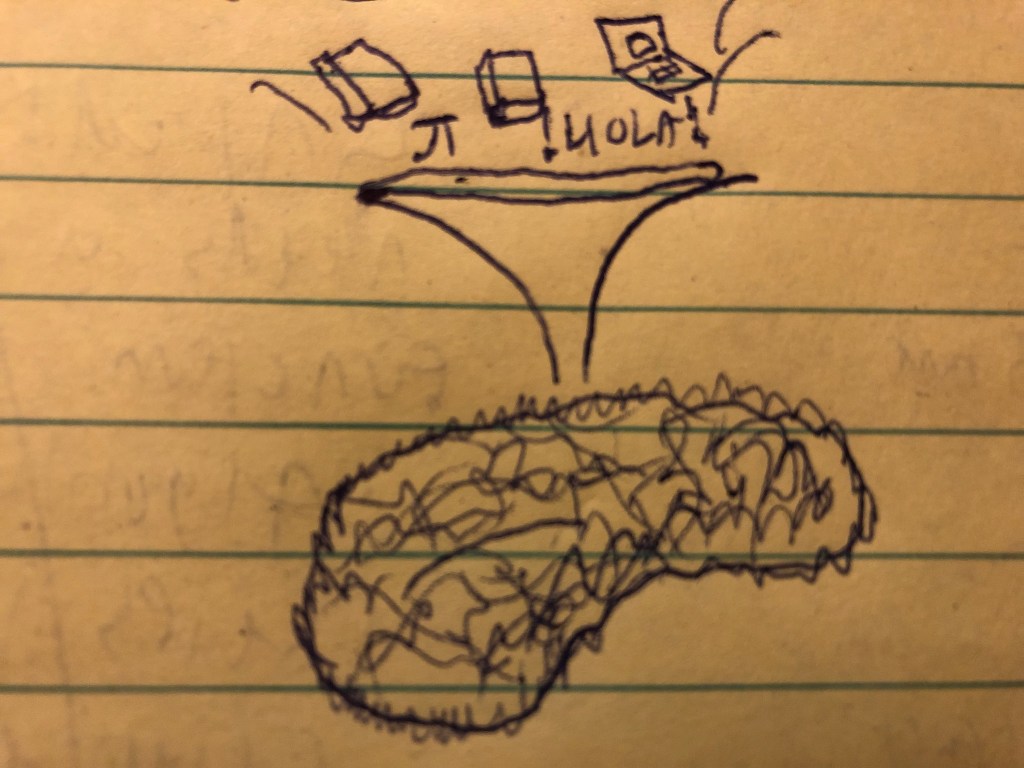
Through sheer force of willpower and solitary rage (college-aged me had a lot of the latter to spare), I had managed to keep my head above water (though not by much) as far as my grades were concerned. The professor starts drawing a molecule on the chalkboard to explain the concept of another chemical reaction. Suddenly, she stops halfway through, sighs, turns around and then delivers an absolute one-liner that metaphorically blew a hole in my chest. She stated that the human brain is plastic and that we are capable of learning nearly anything we want to learn. She wasn’t saying it from a neurology standpoint (though, there is a lot of medical science to back it up), but rather from a motivational one. She then turned back around and continued to draw the molecule on the chalkboard as if nothing happened.
The words cut right through me, as if I had just heard them for the first time. Of course, that wasn’t true, I had heard of the phenomena before. It was something that I had intellectually learned and regurgitated for an exam. My borderline-frantic physiology professor years prior would drone on: neural networks blah blah new pathways blah blah, as I skated through his not-too-difficult course. However, this line from my chemistry professor hit differently; the context of made it resonate in a way that it never had before. The line made her course seem much less like the final boss fight in a video game, despite my current grade level resembling a low health bar.
That throw-away line (seriously, I doubt she’d even recall saying that to us) that my chemistry professor shared was like a limiter being removed. I had truly believed it now and took to the material that much more furiously (I already had a lot riding on passing this course, though that’s a story for another time). I felt aggravated at myself that I hadn’t internalized the message earlier in my collegiate days. It was like unlocking a mental version of Super Saiyan. Though much like the famed transformation in DragonBallZ, the form was unlocked only after a great need for it was present. To end the suspense, I passed the class and graduated. I had beaten the final boss.
The advice has persisted ever since. Motivational speeches advise the starry-eyed youth to never stop learning, and this is good advice. Most of my learning since that course has been outside the realm of science; business concepts, philosophy, foreign languages, and more. The limiter is never going to be reinstalled. Admittedly, most of the course content from that professor’s class has exited my mind, but that cigarette-butt of a line has stayed.
Remember my professor’s advice the next time you complain about Spanish being too difficult, or not understanding the basics of income taxes, or how Facebook’s business model works. Our brains can hold much more information than we give ourselves credit for. Besides, saying something like I’m not good at foreign languages is a classic example of a fixed mindset. The term, popularized by Dr. Carol Dweck’s book Mindset, is the belief that someone’s capacity is already determined, and that limitation is part of their identity. My professor’s advice, on the other hand, feeds into the growth mentality. Growth mentality is the belief in progress and rejects the idea of pre-conceived limits.
You are capable of more than you think you are. Reject the fixed mindset.
 Home Page