
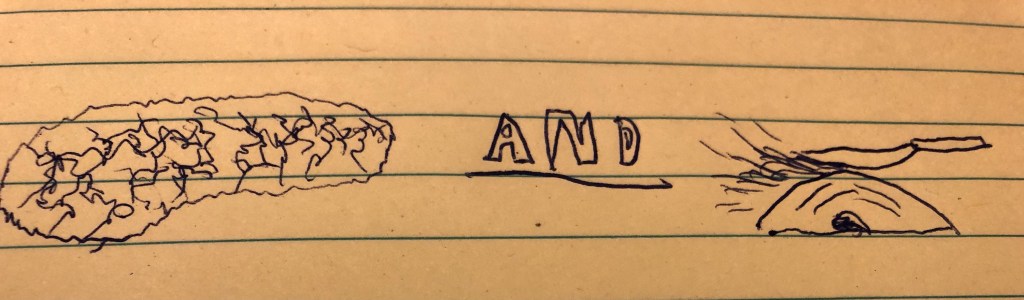
Back in high school, my gym teacher gave me the onerous task of pushing a wheel-barrel up a hill. I happily obliged, being the offensive lineman that I was. Most of the task wasn’t too bad, except one part of the hill had a deep rut, which the wheel barrel would get caught in, thus needing extra force on my part to traverse. He then guided me to maneuver the barrel a different path up the hill, only to then smugly say A little bit of brain beats a whole lot of brawn. Various other teachers in my high school would parrot the more common variation of the phrase work smarter, not harder. I’ve heard the phrase on-and-off again in my adult life as well. However, nobody ever stops to examine the phrase for what it truly is; a false dichotomy.
Don’t get me wrong, working smart is definitely important. There is a definite advantage to those who can strategize a plan of attack before starting a difficult task. There are entire ancient philosophy teachings, military academies, chess bootcamps and MBA programs all solely dedicated to making their protégé’s into better strategists. There is also a major premium for those who can find and resolve inefficiencies in current ways of doing things, whether it be by reducing the number hours spent on a task, money spent on a project, minimizing the stress-induced blood pressure spikes, or simply by eliminating needless work in the first place. Working smarter is definitely an asset.
However, working hard is a virtue in its own right. The College Football Hall of Fame has emblazoned famed Notre Dame football coach’s Lou Holtz line “nobody ever drowned in their own sweat”, and retired Navy SEAL Jocko Willink has credited his work ethic for his survival through the rigorous Navy SEAL selection process. Being able to put one’s nose to the grindstone and outwork the competition is in itself a rarity. Days after losing an NBA Finals, LeBron James can be found back inside the practice gym preparing for the upcoming season, even while his peers are on vacation. Ruthless tenacity is also an asset.
So, the phrase work smarter not harder is really a false dichotomy. It preaches that hard work is not necessary, or that it is optional. It gives the illusion that the speaker can merely optimize their way out of most problems. While this can be the case sometimes, this is not as universally true as users of the phrase would like us to believe. In fact, in my personal experiences (a personal anecdote, GASP!) it is often the lazier people who love to parade around this phrase. To truly succeed, we should work smarter, then work harder. This is the unspoken idea of the Plan-Do-Check-Adjust style of problem solving used in the famed Toyota Production System, and it can be applied to many other aspects of life.
Working hard before having strategy in place, while admirable, is akin to just smashing your head against a wall repeatedly. Therefore, in the Plan phase, the key is to devise a plan of attack first-assuming you have the luxury of doing so. Dust off your unopened copy of Sun Tzu’s The Art of War, blare those motivational West Point speeches and dig through those old business case studies that you never actually read; now is the time to strategize.
However, once your ducks are in a row, it’s time to execute. In the Do phase, work feverishly hard towards the plan that you’ve devised to take on that sales project/classic car re-build/ term paper/workout regimen/ whatever. There is no room for being weak or petty, one can have results, or one can have excuses (a true dichotomy!). Be utterly relentless at this stage. Wake up at 4am, blare that overly loud dubstep music in your AirPods as you pump out each rep or try to torque that rusted bolt off, follow it up jumping on a high-energy zoom call as you fast intermittently. In essence, grind.
Next, you’ll arrive at the Check phase, which will be a pre-determined point that you’ve ideally would have planned in the Plan phase (assuming you thought that far ahead). Stop grinding for a moment and take stock of progress that has been made on your keto diet/home renovation/ NFT ice cream start-up/whatever. This is the time to again, work smarter. So go ahead and listen to the serenading voice of Neil DeGrasse Tyson (listening to him always makes me feel smarter for a little while), read past the first few chapters of Robert Greene’s 48 Laws of Power, and eat some grapefruit while you strategize (there’s that word again!) on what to improve upon or do differently. It’s halftime, and you’re the coach, so make the second-half adjustments.
Now we’ve arrived in the Adjust phase. Start ruthlessly implementing the aforementioned second-half changes you came to in the Check phase. Again, don the headphones and turn the volume up to 11 for DMX, take a cold shower, run 37 miles before breakfast and rebuild the entire transmission in your driveway. This is the phase to be absolutely ruthless in your pursuit of your blockchain yoga studio start-up/ cross-fit routine/ construction of your evil lair/ whatever.
The true beauty of the Plan=Do-Check-Adjust and my bastardized advice of work smarter then work harder is that it is cyclical. However, there is one vitally important caveat; working smarter absolutely must come first, otherwise you’ll just be punishing your physical and mental health for no reason. It’s also important to note that unlike the practitioners of the work smarter not harder philosophy, The Daniel Espinola branded work smarter then work harder mentality is not for those who want to be exclusively strategists. Much like systemic racism or music from the 1980’s, there is simply no room in society for people who are “just the idea guy” anymore. Yes, hard work is mandatory. No, you cannot avoid it. So you might as well work smarter then work harder, that way the work will at least be worth something.
Work smarter, then work harder.
 Home Page