
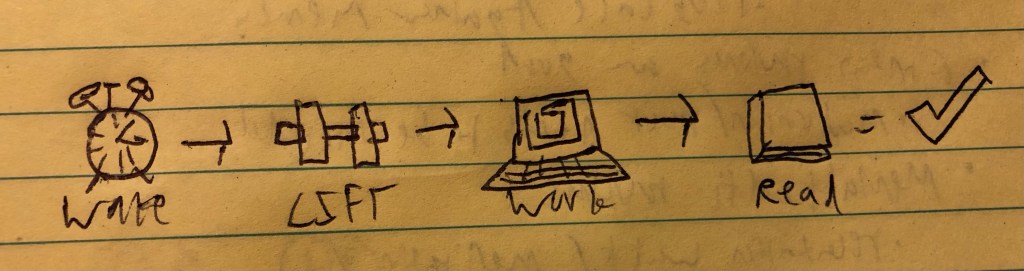
Open up nearly any social media platform and you’ll surely see some low-effort motivational page espousing messages like routines are bad, or routines are the death of progress. Foregoing routines altogether is next to impossible, and for the rare few who manage to do it, a life of constant change is usually not a happy one. Routines, if done right, can slowly but surely lead to a lot of positive change in one’s life. The meta-concept of a routine itself is not what is bad.
Essentially, a routine is just a string of sequential habits. Think about it; each morning we wake up, eat the same breakfast, get ready for the day in the same order, arrive to work and so on. It’s the underlying habits that make up the routine that are subject to question. Even then, the habits are only subject to further examination if they are unproductive or harmful. That is the pitfall of many of these motivational channels; they willfully omit context, because a lengthier-though more realistic-post is less punchy on the algorithm. In fact, a breakthrough book released in 2022 called The Case Against Memes delves deeply into the topic of willfully omitted context.
Of course, it is helpful to break routine once in a while. This could be to stop and smell the roses or to simply spice things up once in a while. Breaking out of a comfort zone is also a good reason to stop a routine, or to change a routine that is no longer aiding your life goals. The bad news: habits-and hence routines-are easy to fall into since our brains love to run on autopilot. The good news: changing habits-and hence routines-is absolutely possible, within our control, and several scientifically based methods exist to help us to do so (no shock therapy required!). Charles Duhigg’s book The Power of Habit is one such example of a resource that can help change habits that no longer serve your best interests. Duhigg spends a lot of time in the first few chapters of the book detailing what exactly a habit is and how powerful they truly are. However, all hope is not lost, in fact, far from it. A great way to break an unproductive habit is first to study the habit itself. The start to each habit is a cue, a subtle trigger that imitates the brain’s autopilot procedure. Finding the cue is the first step to changing the habit. This cue could be related to timing, the physical environment, a mood, or anything like that.
Of course, the above paragraph’s premise depends on the assumption that a change is even needed in the first place. Routine is not inherently bad if it serves you and your goals. For example, many people have a fitness routine. This could involve waking up at a certain time and getting in a run before breakfast or getting in a workout before leaving for work. Many with a fitness routine also have a nutrition routine; this is another varied area but usually involves consuming things such as steel-cut oatmeal, egg whites, protein shakes, lean protein, black coffee, etc. Mental health routines such as going for a stress-relief walk or practicing meditation are common as well. Morning efficiency routines have become more common in online discourse lately (though in actually have been practiced since time immemorial) such as shaving in the shower or planning what outfit is to be worn in advance. None of these routines are bad.
These same motivational channels that bemoan the concept of routine across the data-mining sites never seem to discourage fitness routines. In fact, these feeds seem to be pro-fitness and protein-product channels Therein lies the problem with a large part of the routines are bad community, the problem of unrelenting judgement. There is a lot of stones cast towards people who have routines that differ from their own. It as if the thought never occurred to them that someone could have a different autopilot lifestyle and still be fulfilled in life. There’s also another problem with those who spew routines are bad; it is an obvious lack of self-awareness. For example, these hustle-culture motivational channels (though, hustle culture itself is not bad); what do you think their lives are, if not a long and relentless routine?
The real key to routine is self-awareness and reflection. Ask yourself Is this still serving me? Is this helping me to accomplish my goals? If the answer is no, then Duhigg’s book is a great place to start in helping you to break the underlying habits that form the routine in question. However, this idea that routines are the death of progress is absolutely ludicrous. Think of any successful person in nearly any avenue of life, and I’ll show you someone with a routine built upon a regiment of positive habits. LeBron James has a routine. Mark Zuckerburg has a routine. Neil DeGrasse Tyson has a routine, and countless others. I’d go so far as to say it is rare to find somebody who is consistently successful at whatever they set out to do that eschews a routine and decides to just wing it day after day. Humans crave routine, and at best, our days feel just a little off without them. At worst, we are helpless and unproductive without them. Chances are that the bots people posting this nonsense have a routine themselves.
If you have a routine that is positively serving you, then you have my sincere kudos. Don’t let some pseudo-influencer with thousands of bots fans routine-shame you into feeling otherwise, just so they can conveniently sell you 20% off some dubious pre-workout supplement.
 Home Page