
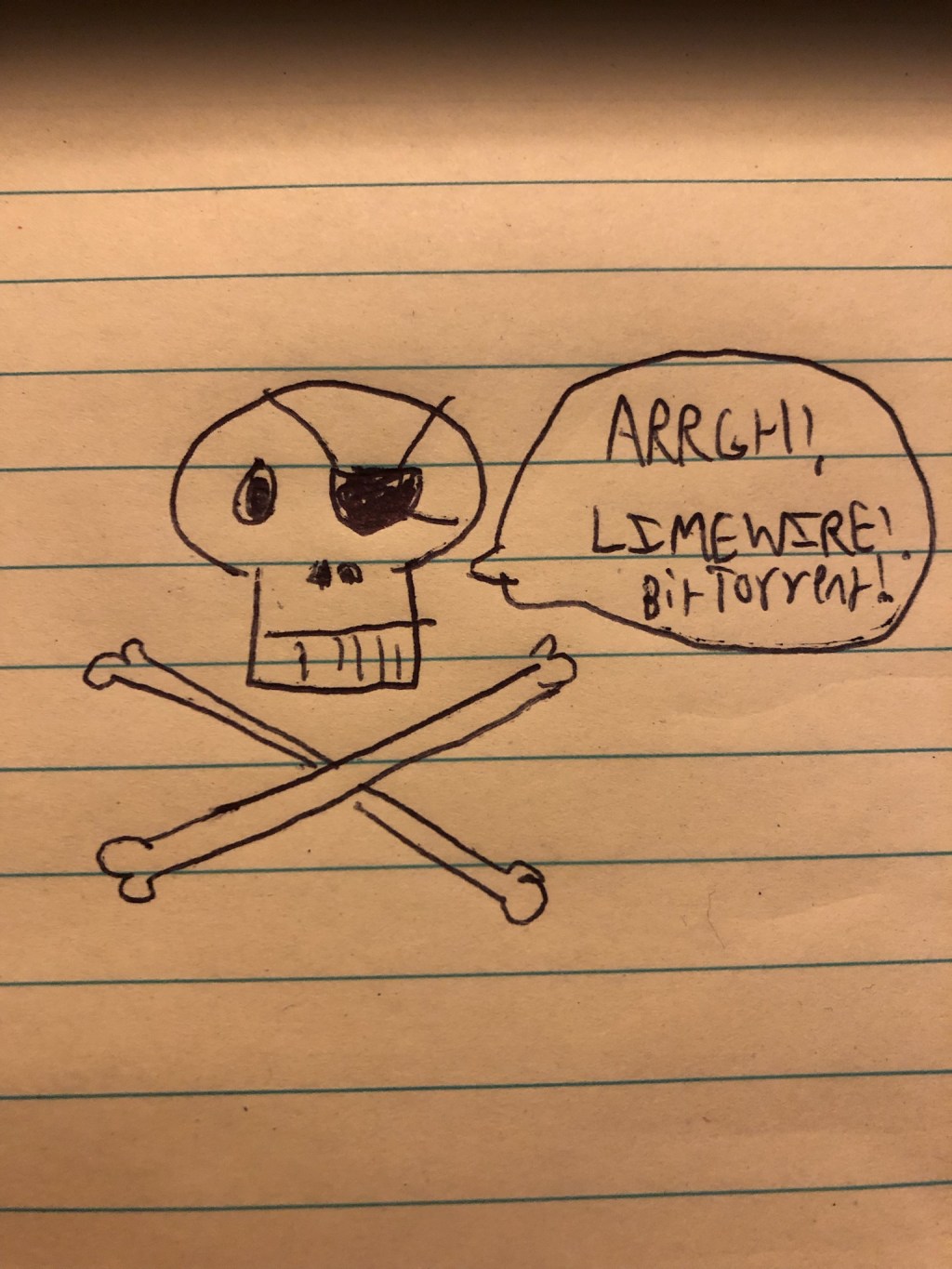
Piracy is a crime committed by those of privilege sitting inside airconditioned rooms on the soil of a developed Western nation. Furthermore, the crime is committed by those who, more often than not, can afford to pay for the content that they steal. It is a crime of sheer entitlement, one in which the criminal wants to watch the movie/play the video game/listen to the album but simply doesn’t feel like paying for it.
Privilege is a word that is frequently used nowadays, however it does have a lot of merit to its use. Privilege in our modern context typically refers to a set of advantages that one person has that another person doesn’t. This can be race, gender, national origin, native language and a whole host of other parameters. One such parameter is financial privilege. These advantages are heavily involved in molding our worldviews, especially regarding that of crime.
“But Dan, I’m not privileged. I can’t afford the movie/game/album I want” a drain-on-society will inevitably say. However, this argument falls apart when we point out that the average US internet bill is more expensive than a movie ticket, music album, or video game. Therefore, if you can afford internet access in the United States, then you can clearly afford to legally pay for the pilfered content. “But Dan, these prison-worthy cancers are committing this crime at scale; they download more than one game/movie/album per month!” a criminal will retort. If these criminals have enough free time to enjoy all of this stolen entertainment (read, a luxury good), then they clearly must have a leisureful life. Having that much downtime is a surefire sign of privilege-the rest of us are actually at work building society instead of dragging it down.
As I just mentioned, this stolen content is a non-necessity, a want. We learned as young children the differences between wants and needs. Items needed for basic living such as food, clothing, batteries, and toiletries are commonly stolen in the physical world. Online piracy of copyrighted content is different in the sense that the good itself being stolen is indicative of the thief. Nobody actually needs to play Undertale or watch a bootlegged boxing match, however we do all need to eat to survive. Pirates are inherently higher on the Maslow’s Hierarchy than the common shoplifter. The truly poor people of this country aren’t pirating movies or TV shows, they’re simply just going without. Piracy is a crime of privilege.
Often, the criminals will rationalize away their crime by using weak excuses such as the business model is exploitative! The creator isn’t receiving the entire amount of the purchase price! Capitalism always involves a form of arbitrage in some way. An employee is paid less than the value they generate for their employer, ditto for a professional athlete, a film director, or a rapper. Another commonly pirated piece of content is college textbooks. While I have sympathy for students who are struggling financially, and the textbook industry is exploitative, this still doesn’t excuse breaking the law. Here’s a difficult truth; the law applies to everyone and all the time, not just who and when you feel like it. Besides, whatever happened to mentally saying Challenge Accepted when the professor bluffs on the first day of class about the textbook being required? “But Dan, that was back in your day. Things are totally different now!” I graduated in 2015…nice try. Besides, if you felt an industry was truly exploitative, you’d boycott it entirely.
I’d wager a bet that nobody pirates Immanuel Kant’s works, because if they did, these blights on society would understand universal ethics a little better. Essentially, actions that are self-contradictory or unsustainable on a universal scale are unethical. So, the argument of [insert industry here] doesn’t pay creators enough, therefore I’m going to steal is a ridiculous statement, and anyone who unironically uses that reasoning deserves utter contempt. Where do these ethically-challenged people (I’m being loose with the term people) think the money to pay musicians/actors/game developers comes from? When you pirate content, you’re saying through your actions that these people don’t deserve to be paid for the work they do. Alas, our German friend Immanuel Kant and his universal ethics comes into play again. As a thought experiment, let’s see how calm and level-headed these criminals would be if somebody stole from them and/or their day-job stopped paying them. While these crooks are admittedly higher on Maslow’s Hierarchy than the common shoplifter, let’s not fool ourselves into thinking that they are self-actualized enough to be okay with being the victims of theft. Whatever happened to The Golden Rule?
“Okay Dan, fine, you’ve made your point. So what do you propose we do about it?” Simple, we start enforcing the damn law. We have plenty of private prisons that aren’t going away anytime soon, and despite my best efforts, the police force isn’t going to de-militarize anytime soon either. So, I propose we merely pivot our strategy a bit. Instead of locking up people for smoking weed, let’s start filling our for-profit prisons with pirates. Locking up pirates has another benefit as well; since piracy is a crime of the privileged, this would diversify our prison population. Much ink has been spilled about the demographics of the prison population, so I don’t feel the need to do so here. Suffice it to say that anyone who is against locking up pirates is inherently against diversity and inclusion efforts.
I look forward to receiving 1,001 hateful comments about this article. However, I must thank all of those who do that in advance. Thank you for not only feeding the algorithm, but we also appreciate it when stupid criminals out themselves, which is common in the piracy community. To anyone who isn’t a pirate but feels the need to defend them anyways; unless you have J.D. after your name, you should look yourself in the mirror and ask Why am I standing up for literal criminals?
 Home Page