
Unlike my critiques of math class, science class, and gym class, my critique of English class will include only one solution but it will have wide-reaching applications. Once again, I’ll be focusing on high school students, more specifically in this article junior and seniors. When I refer to English class, I’m not including English as a Second Language classes in this reform pitch; I simply don’t know enough about that realm (I just know it’s different from foreign language classes for Americans). As always, make sure to sharpen those pitchforks!
Essentially, we need to arm our students with the ability to read legal documents, to the point of full mastery. Our modern world is full of contracts that are written in complex legalese that many love to complain about, including senators. Anything that our students will do in life will involve a contract; signing a lease on an apartment, opening a bank account or credit card, starting employment, beginning a social media page, and countless more examples. Currently, only law school students go over this material at all, and that is harmful to our society, as this limits the number of legally-savvy literates in our society drastically. I expect all of the literature purists to get mad at me, but that’s okay; they’re just upset that nobody seriously talks about The Catcher in the Rye after graduation.
Vocabulary will transition away from words that are only used on the SAT’s to words that are commonly used in contracts, laws and other legally binding documents. College hopefuls will take the SAT’s only once in their lives for four hours on a single Saturday yet that is what we focus on, yet we ignore being able to interpret documents that have lifelong impact. Once the vocabulary is mastered, a lot of the legalese that scares the common person should become a lot less daunting.
Students can also be walked through combing through laws, as I have done in my recent banking article. Knowing where to find the laws (official sources only!) and being able to drill-down to find the relevant legal information would be a big start. Knowing, or at least being able to easily look up and easily decipher, the laws would go a long way to helping our students protect themselves from one-sided contracts and scams. There is no reason we can’t start teaching this skill in high school, thus arming every citizen with fully understanding what they are about to sign. I promise that this will be a much more productive use of classroom time than rote memorization of lines that Shakespeare wrote hundreds of years ago.
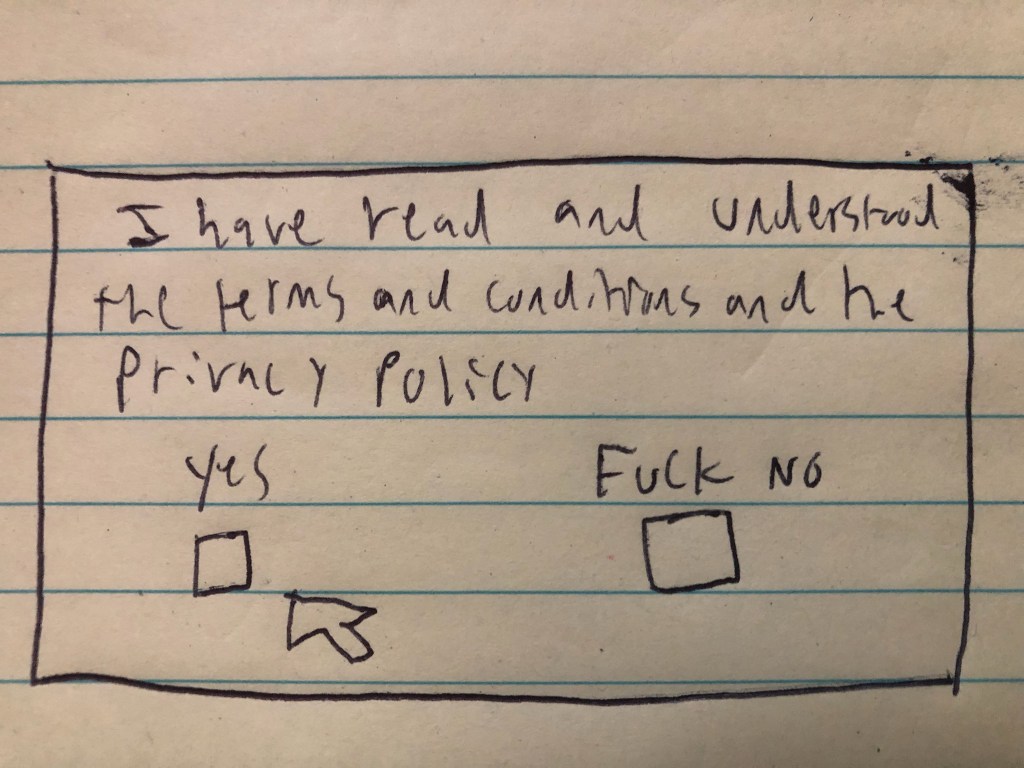
After enough comfort with legal terminology and foundational law has been built, the students can then spend class time and homework reviewing example contracts. The point is to practice spotting clerical errors, contradictions, loopholes and clauses that aren’t legally enforceable. That last part is especially important in our day and age, with one recent example being non-compete clauses in California, given how common they can be. Another potential exercise is to have students draw up mock contracts with one another for mundane tasks such as lending out a pencil to a classmate. Their classmate would then have to review the contract, examining it to see if it is legally enforceable, if there aren’t any trap doors, contradictions or any other nefarious deeds written into the contract. This naturally would be in addition to seeing if they would agree with the terms and conditions set forth in the contract, along with the penalties of failure to return the pencil. If nothing else, our students will get into the habit of reading something before they sign it.
Knowing the so-called legalese will also come in handy when the Supreme Court makes a ruling on a case. The justices on the Supreme Court are all law school graduates, and as such they write their opinions regarding their rulings using legalese. If our students can readily read and decipher the meaning of these rulings, then they’ll be much more able to form legitimately well-formed stances on these rulings, rather than getting triggered by sound bites as they currently do.
Of course, curriculum changes can only go so far. To truly drive this point home, we would have to fundamentally change who we hire to teach these new classes to upperclassmen. Gone would be the days that having a B.A. in English Lit would qualify one for the job. Instead, we would have to hire J.D.’s to teach this material to the youth. It’s not as wild of an idea as it sounds, given that so many of them want to quit their jobs anyways. Lawyers also get paid less than you might think, so it might not be too difficult to poach them from the court room. Therefore, it’s doubly not a bad idea to recruit disgruntled lawyers to teach this material to the youth.
Think twice before summoning the angry mob, for terms and conditions may apply…
 Home Page