
There’s no shortage of articles and pundits (eww…pundits) on the internet clamoring for an end to the War on Drugs. While I’m sympathetic to this push (disclaimer: obey the law), their push is often in the wrong direction. As I mentioned the other day, I have an appreciation for fiery passion, however a level of cold calculation needs to come along for the ride as well. So, sharpen your pitchforks as I go over why legalizing drugs such as marijuana, cocaine, and other currently illegal drugs isn’t the answer.
Generally, members of congress tend to be lawyers or executives before entering politics. I’m not against having those skillsets present in the legislature, in fact it is necessary to understand how laws will impact businesses. However, there are only 2 psychologists and no former social workers or social scientists in the Capitol. This is a weakness because it shows that the ones who write the laws generally do so with no fundamental understanding (or worse, fucks given about) how individuals/populations think and behave. Furthermore, there are no economists writing our laws currently. This is concerning because the economics is essentially the study of incentives. Understanding incentives is key, doubly so if it’s your job to create the rules that will govern how 330 million people live their lives. An example of government not understanding incentives is when California legalized marijuana, the tone-deaf laws they passed wound up attracting Mexican drug cartels to their public lands. This easily could have been avoided had the elected officials understood how incentives motivate people. Quick! Somebody call Daniel Kahneman!
What is worse, is that when the ignorant legislature passes laws legalizing and regulating a formerly illegal commodity or activity, they will actively exclude experts. The federal government loves to exclude candidates that have first-hand experience in the formerly illegal field. The chief example of this is the line “potential conflicts between your criminal conduct and the core job duties”. States such as California have followed in the Fed’s footsteps by asking for criminal history, and California is one of the more progressive states in the country. It isn’t difficult to believe that somebody with a conviction for marijuana would be ineligible for a job regulating the newly-legalized industry. As discussed previously, those in the drug trade must have a keen understanding of supply lines, quality control and sales. Why would we want to exclude these people? The government usually does not have resident experts in drug cultivation on staff; they’re usually playing catch-up with the producers. During my undergraduate days, I had a professor that quipped the bottom one-third of each class winds up working for the government; we didn’t realize at the time how correct he was. He’s not the only one with this viewpoint; New York City’s mayor agrees as well. The government has decided to eschew primary sources in favor of charlatans.
While legalization does re-prioritize the police force (and that cannot be undervalued), it is the wrong solution. This is because with legalization comes a whole host of guardrails installed by the government, along with ever-persistent villain Tax Man (gasp!). It’s two-faced of our elected officials to condemn something such as drugs for several decades and then attempt to collect taxes on it; you made your bed, now lie in it!
Rather, the better model is decriminalization. It combines the best of both worlds; the police can now use their militarized gear and trigger-happy mentality on situations where it’s actually warranted while, and this is important, leaving people the hell alone. Government does not know what is best for the economy or the people.“But Dan, states/Uncle Sam sure could use some extra revenue” the cost savings from not pouring endless munitions, police hours and judicial appeals will have an immediate impact to the bottom line of cities/states/the feds. Also, it’s not like we live in a country with socialized healthcare anyways, so what does it matter if someone else chooses to use drugs? But I’ll humor the socialized healthcare crowd anyways; use of drugs will be construed as opting out of socialized healthcare. Thus, users are free to use at their own risk; no guardrails and no safety net.
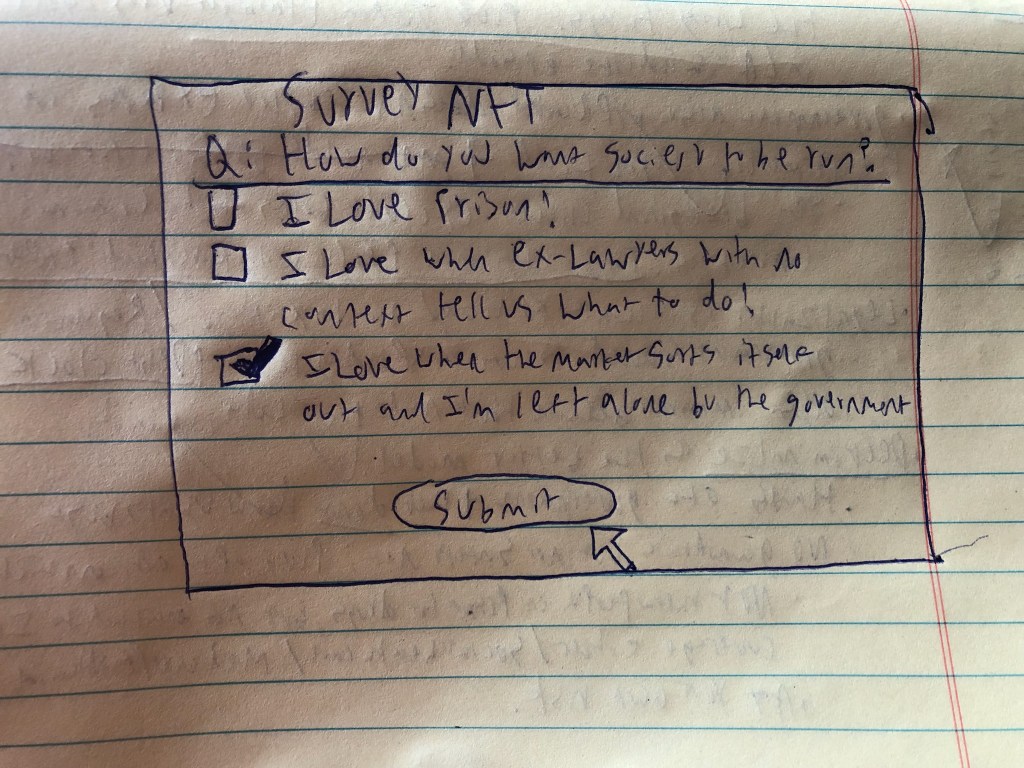
Decriminalization wouldn’t even be that hard either. Rather than passing new laws, all that would be required is to simply repeal the existing ones; thus having less laws on the books than we currently do; a simpler legal code (though that wouldn’t be a problem if I had my way). After these archaic laws get repealed, all we as a society would have to do is just sit back and let the now-decriminalized market sort itself out. Society would make no arrests on citizens exercising bodily autonomy, nor would we have to guarantee quality or safety of the product (use at your own risk), nor would we suffocate entrepreneurs with punishing taxes.
Government meddling is bad, m’kay.
 Home Page