
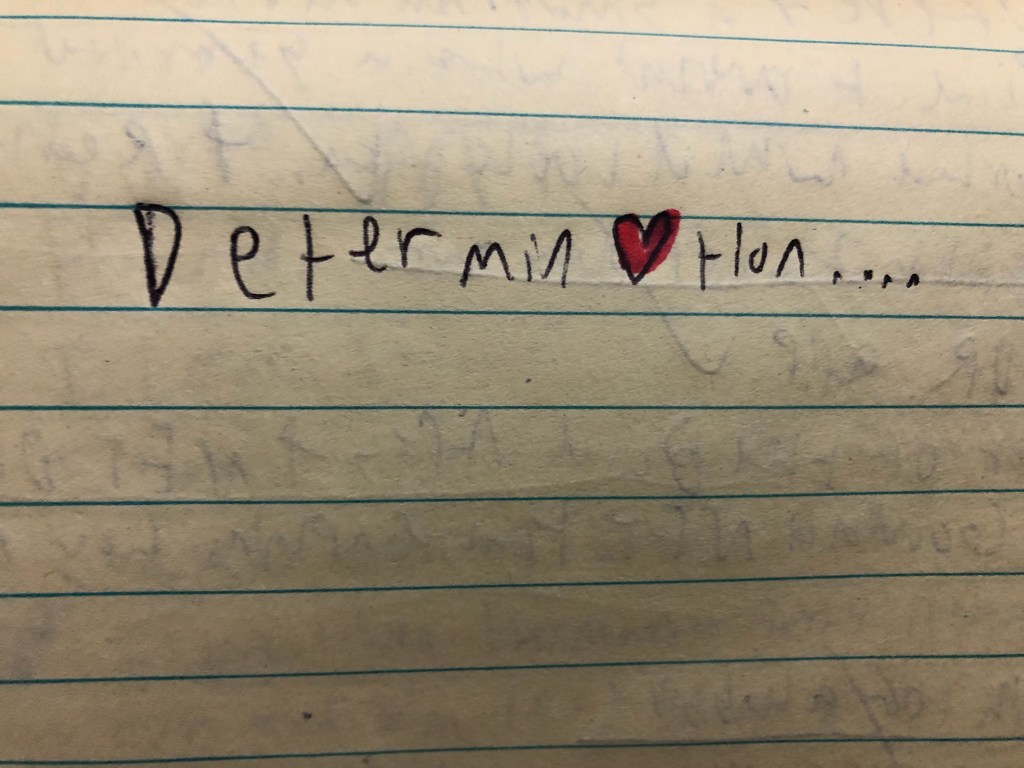
Toby Fox is the creator of both Undertale and the in-progress Deltarune. While I realize that I sound like a massive hypocrite for writing a pro-game developer article so soon after proclaiming my jaded stance on the activity, let me assure you that Toby Fox is the real deal. Toby Fox is a genuine saint, master marketer, visionary and forward-thinking strategist all rolled into one. Toby Fox’s simplistic style has filled his audience with determination, while his big-budget competitors are left to sulk as they sharpen their pitchforks…
Both Undertale and Deltarune are made with 16-bit graphics, text boxes instead of human voice acting, and turn-based game mechanics rather than using action-RPG gameplay. This flies in the face of many modern conventional gaming conventions. However, rather than be relegated to the dungeon of obscurity, both games have reached critical acclaim and have built a cult-like following along the way (guilty as charged). Toby Fox’s games are truly a throwback to a bygone era. In his games, where the story is king, as it should be. After all, we are hard-wired to love stories, unlike cutting-edge graphics that will not age well in a few short years. By choosing to create games based off of simple-yet-powerful plots and opting to not use modern bells-and-whistles, Toby Fox has essentially created games that are timeless.
World-building is another realm where Toby Fox stands alone. Modern games, such as Metal Gear Solid 5 and Zelda: Breath of the Wild, pride themselves on having a massively expansive open world. Undertale and Deltarune have skipped this in favor of a more linear format. However, Toby Fox has hit the sweet spot; his games aren’t walk forward to progress the story like Final Fantasy X was. Role-Playing games need to reward their players for exploring by hiding treasure chests in places the player wouldn’t ordinarily travel (Kingdom Hearts: Birth by Sleep and the Final Fantasy VII remake are prime examples of this). However, Fox’s coaxing of the player goes much deeper than that; the flavor text and the interaction with the NPC’s are both dynamic and endearing; a feat that didn’t require a large map to accomplish. Much of the environment in both of his games is interactive, with the protagonist making observations of the surroundings or the object in question. The flavor text is inoffensive yet packed with dry, cheesy humor (which is right up my alley!), not to mention it changes depending on the context of the story. The NPC’s are unique and have backstories that distinguish themselves from other NPC’s. The NPC’s and main characters from Undertale are all now townsfolk in Deltarune, living normal lives in the human world in a heart-warming show of harmony. Toby Fox shows that in terms of world-building, depth beats width every time, and it doesn’t take 100 hours of gameplay to accomplish that either.
Toby Fox’s debut game Undertale has a straightforward story, however it is structured in a way in which it is impossible to get the entire story in a single playthrough. Players who complete their first playthrough as the story is usually played by typical RPG fans are treated with the neutral ending, with the protagonist leaving the underworld and returning home. However, those wishing to see more of the backstory of characters such as Asriel, Undyne, Papyrus, and Alphys may opt to play the Pacifist route, in which the player befriends/de-escalates the random encounters rather than killing. This longer, and albeit more difficult story arc is much more rewarding as the player is introduced to motivations and ambitions far deeper than they’d otherwise experience. This story structure nearly forces the player to consider their actions of each playthrough carefully, and encourages them to choose differently in following playthroughs. Undertale has another, more underrated mechanic that encourages multiple campaigns; the judgment of Sans. Sans is a character who serves as an overseer to the player, and near the end of each journey, the player meets Sans inside of a church where Sans renders his final judgement of the players actions. Sans’ final judgement entices players to repeat the game with different decisions just to see how Sans will weigh in on that playthrough. Regardless of what a player chooses to do in each attempt of the story, Undertale remembers each decision the player made in prior playthroughs (one obvious example is the Cinnamon vs Butterscotch pie choice early in the game).
Much like Hideo Kojima, Toby Fox has weaved his non-violent ideologies into his games. In the recent Metal Gear Solid games, Deltarune, and Undertale, the player is rewarded for sparing enemies rather than killing them. Deltarune has built on this idea from Undertale further by including the spared monsters into a re-built community. However, the paths differ because in the Metal Gear Solid games, spared soldiers are brought back to Mother Base to be converted to Snake’s private army; the reward for non-violence is violence on the players behalf. Toby Fox decided to forego this concept; non-violence is a reward in itself. The battle mechanics of Deltarune also make it easier to spare monsters rather than kill them. However, the traditional RPG battle tactics are still available, so if the player may still exterminate enemies if they choose to do so. Both creators make it known that the player is choosing to do good or to do evil, with full knowledge of the consequences. There is a Genocide route to Undertale, in which the player does nothing but take the lives of every single enemy in the game, though Toby Fox makes it abundantly clear that the player is the villain rather than the main character, while going out of his way to crank the difficulty to 11 on that route.
Toby Fox is in touch with the culture of his passionate fanbase and with the PC gaming community as a whole. Both Undertale and Deltarune were released as PC games rather than console-based games. Toby Fox shows how in-tune with the culture he is by hiding subtle jokes, outtakes, and outright warnings deep into the .exe files of the PC-versions of his games. Toby Fox knows that PC-gamers are typically early adopters of technology that enjoying tinkering. Rather than put up walls that will eventually be penetrated; Toby Fox has accepted the reality that curiosity will get the better of this crowd, and has strategically accounted for it rather than fight it. He subtly encouraged his fans to explore the source code of his games, while still making it known in game that he knew that they were trespassing. However, make no mistake, Toby Fox still has a fondness for catching pirates.
Toby Fox has let his personality shine through while remaining accessible to his fanbase through his website. His brand of cheeky humor comes through as he “hides” the contact e-mail for reporting bugs in his games in large, bolded font in the center of the screen. He also released Chapter 2 of Deltarune for free in September 2021, citing that “the world has been really tough for everybody recently”, however he implored his fans to financially support other independent developers who weren’t as financially secure as himself. Toby Fox has undoubtedly won the hearts of many for doing this (myself included). Toby Fox is a man with a vision, and genuinely wants to share that vision with the world, and is willing to sacrifice a deadline in order to make a quality product (something that couldn’t be done at a publicly-traded AAA studio). His website also has some self-defacing humor and built-in humility, as he thanks the reader for sifting through some “stupid garbage” on his website; Mr. Fox, I can assure you that nothing you write is “stupid garbage” at all!
He’s a master of leaving the audience wanting more. On the Deltarune website, he’s spoiled that there is only one ending (unlike the previous game) however, “there is something more important than reaching the end”, thus teasing his audience that coming chapters of Deltarune will have more than meets the eye. In the FAQ section, he alludes to the fact that there are some connections between his two games, though will not elaborate further As a result, his rabid following (again, myself included!) absolutely cannot wait for the release of the next chapters, and can’t throw money at Toby Fox fast enough. Toby Fox has made it clear a few times on his website that more money won’t make the games come any faster. However, he still offers merchandise and in-game soundtracks for sale “if you really want to give me money”. I personally cannot wait for the remaining chapter of Deltarune to come out, I’m willing to pay a premium for them, and I know I’m not alone. In this vein, Toby Fox is indeed a master marketer.
Knowing there’s a chance that Toby Fox might read this fills me with determination…
 Home Page