As I’ve recently discussed, I am currently out of a job, though I’m looking for a new one. With that, comes the inevitable interaction with recruiters. During the time I’ve spent in my line of work, I’ve learned to discern the good recruiters from the shady ones. I’ll go over the differences between the two; I expect all of the called-out recruiters supposedly based in New Jersey, Georgia, and Virgina to sharpen their pitchforks…
Essentially, the biggest difference is that the good recruiters play the long game, while their negative counterparts only care about a much shorter timeframe. A few months into my first post-college job, I first started receiving recruiting calls, especially ones from a New Jersey number. Invariably, the caller launched immediately into their pitch after a muffled introduction regarding something I never applied for, and that my resume was absolutely not a match for (IT Support Desk? Seriously?). Few of these New Jersey based recruiters take the time to understand what it is the candidate actually wants, or where they are trying to steer their careers towards. After politely declining their insistence to forward my resume along, the call ends as abruptly as it started. These recruiters would then send me e-mails regarding the job they just discussed with me (which I never asked for, for the record). These e-mails proved helpful, just not in the ways that they had hoped for.
I started scanning the e-mail signature at the bottom of the message to garner the name and alleged location of the recruiter. Using Linkedin (an admittedly imperfect site)), I would then search the recruiters’ profile as a means of fact-checking. Invariably, these New Jersey based recruiters were not in The Garden State at all, but instead in overseas operations. This was an instant turn-off for me; employers love to demand honesty from employers yet the interaction they started begins with a lie? Left swipe. Where would the lies stop? We can cover relocation! We offer hybrid work options! Of course you’ll be converted! Such treachery is unacceptable.
From there, I devised a highly effective screening tool called The Daniel Test, a simple three-question quiz in which the recruiter must pass all three questions. First: Is the recruiter based in the United States? Notice how the question is not Does their company have an office in the United States (as this is a common Ship of Thesus argument these shady cold callers love to use), but are they, the person calling me, physically based in the United States at the exact moment in time? I would fact-check their e-mail signature against LinkedIn to verify that (not foolproof admittedly, though it’s the best I have) and find that this was rarely the case. Next: Is the recruiter based where they said they are? Using the same methodology and reasoning described in first question, a recruiter with a New Jersey number (or Georgia, or Virgina, as these states are also commonly used in these shell operations) but is based in another state is an instant failure. The final question is Did the recruiter read my resume? By that, I mean are they pitching me on something reasonably related to my resume, and not IT Help Desk Associate despite I’ve never worked in IT. Such lack of diligence, from organizations that demand proper due diligence from their employees is grounds for instant failure. Spoiler Alert: nobody who has ever cold called me from New Jersey, Georgia, or Virginia has ever passed The Daniel Test. I have absolutely no reservation about openly talking about my tactic in such a public forum (call me Nick Saban!), because as established, they won’t read it anyways.
However, the profession of recruiting absolutely has legitimate participants. These professionals play the long game; long hours are spent sifting through resumes and LinkedIn profiles, then carefully crafting an intro message to gauge interest. I’ve had numerous introductory calls with recruiters after a few brief messages exchanged on LinkedIn. These calls, in which the area code actually matches their LinkedIn profile and where they said they are based, start off with both sides getting to know each other’s needs before going over the job opening in question. Good recruiters are also completely upfront with those they reach out to, even if the news isn’t always positive. I’ve heard several times That salary is out of our range or Relocation is not provided. I have boundless respect for recruiters that are willing to tell me bad news (yes, that includes You didn’t get the job). Good recruiters are also willing to keep the lines of communication open for months, if not years, at a time; just because there was a misalignment on skills versus openings now doesn’t mean that will be the case in the future. For context; I’ve yet to talk to the same New Jersey recruiter twice.
For honest recruiters based in New Jersey, Georgia or Virgina; you may want to consider banding together and start lobbying for the legislators of your state to toughen up their laws regarding caller ID’s. Spoken from someone who constantly sends calls from your state to voicemail (only to delete them later), the bad actors masquerading as residents of your state are only making your jobs harder. Make sure to include in your pitch to the local congressman that qualified people aren’t coming to your state because of this, hence culling job growth numbers (you know, that thing every elected official pretends to care about).
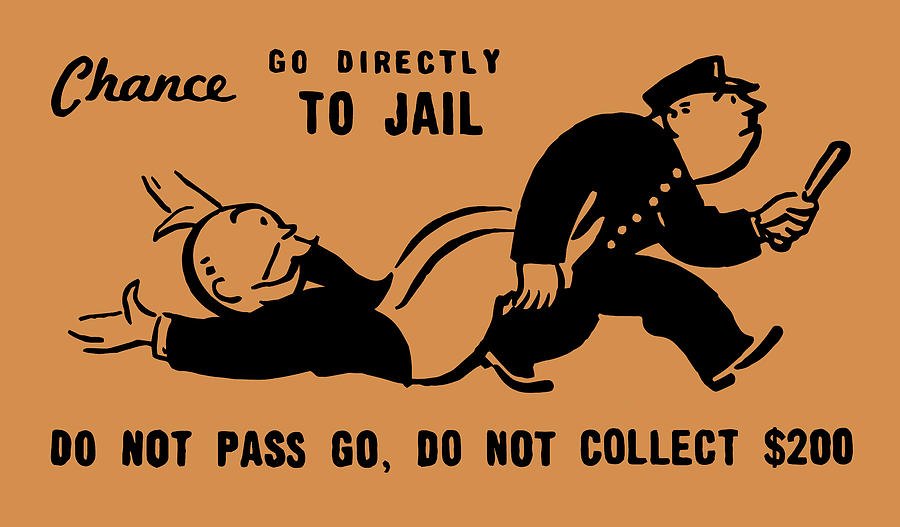
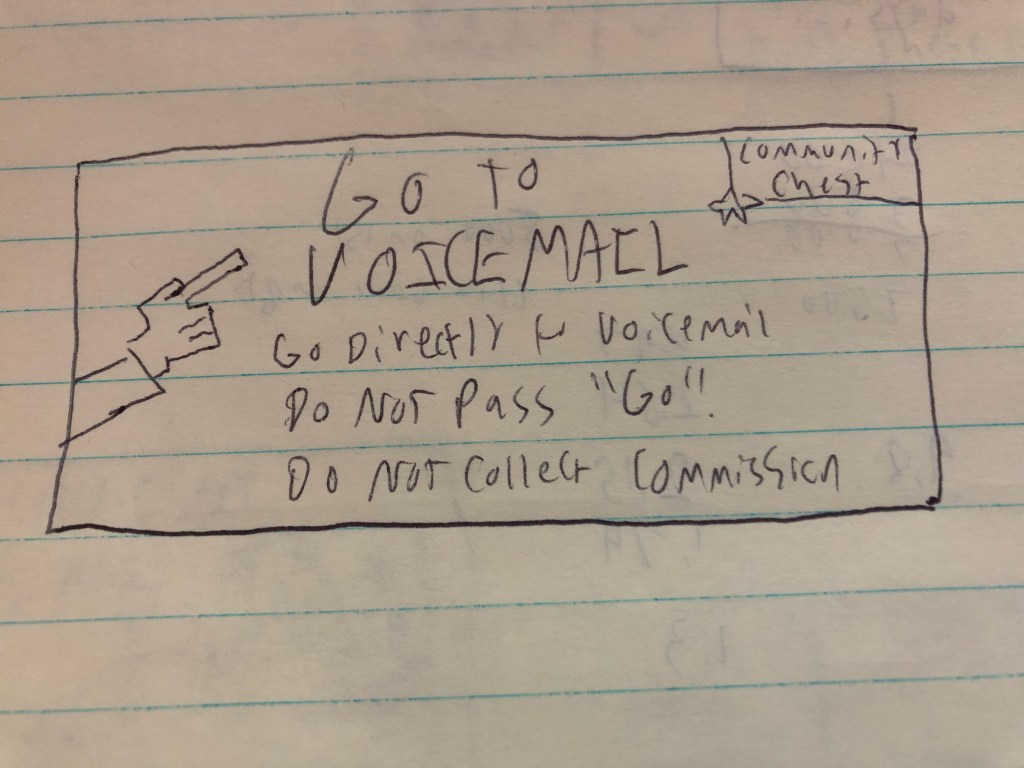
Good recruiters can call me anytime; New Jersey recruiters can go directly to voicemail…
 Home Page