
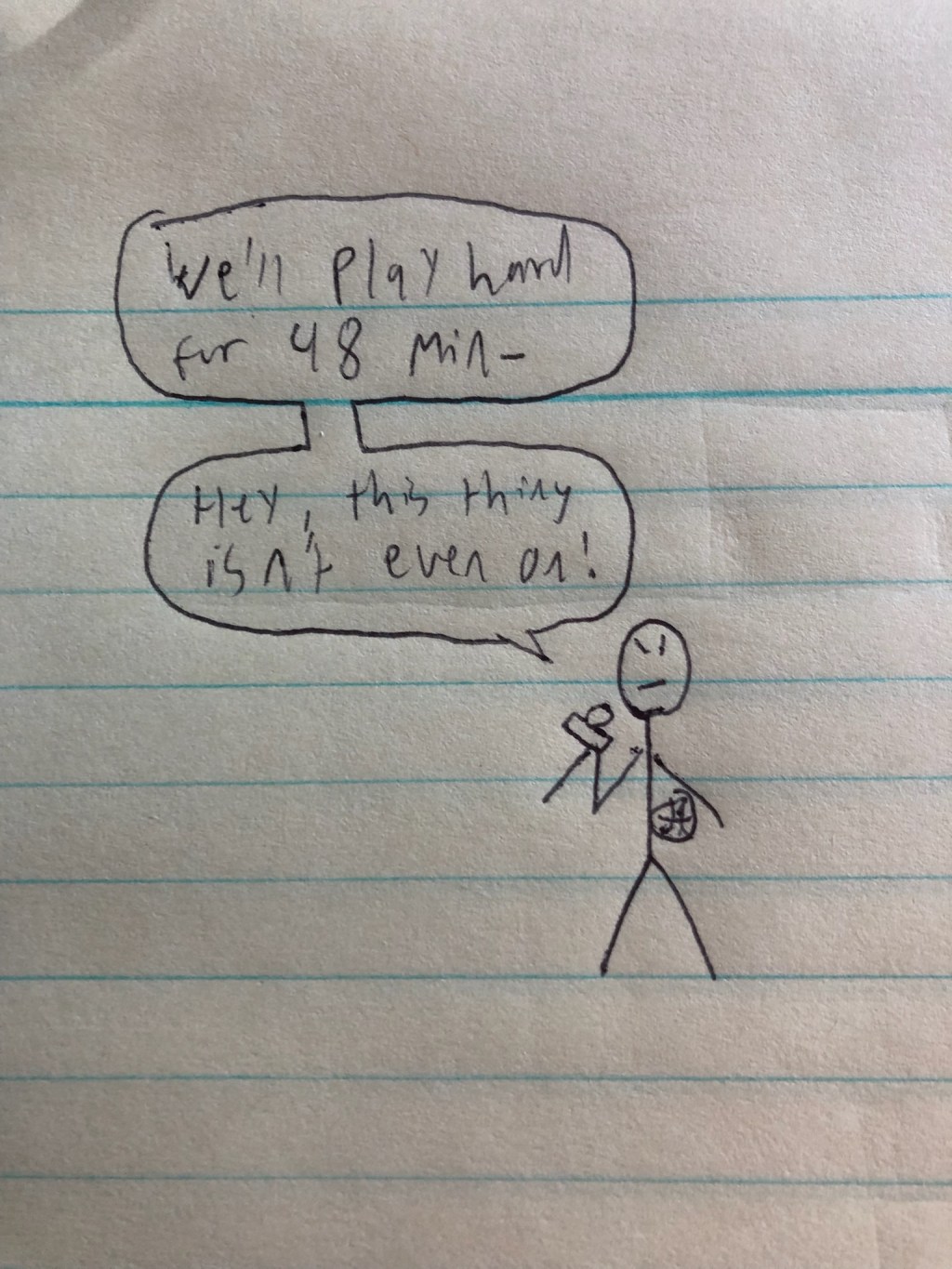
I won’t lie, I love sports. However, I’m also not afraid to call out bullshit either. Athletes feel that they are constantly misrepresented by the media, whether it would be their words being twisted, phrases being put in their mouths, being taken out of context, or some other negative interaction they have with a journalist. I have a solution to this problem; those of you who love college dropouts stating their desire to go hard for four quarters should start sharpening your pitchforks.
Essentially, the strongest idea for improving the relationship between athletes and the media is for the professional sports leagues to ban athletes and coaches from speaking to the media unless they have won a championship. Furthermore, athletes with multiple championships get proportionally more time on the microphone than athletes with less championships. For example, if LeBron James gets ten minutes to speak at the podium after a Bucks vs Lakers game, then Giannis (the guy who failed) only gets 2.5 minutes. For everyone complaining that this is against the First Amendment; many non-sports-related employers embed only senior leadership or a company spokesperson may address the media into their company handbooks, so this isn’t a novel concept. Seeing how the average American is already subjected to these borderline-unconstitutional rules, athletes can put up with it as well.
Athletes, especially in the NFL and the NBA are under constant scrutiny to win championships and have been for a long time. Hall of Famers such as Dan Marino and Charles Barkley are constantly mocked by unathletic pundits (eww…pundits) and fans alike for their lack of a championship, despite their gaudy resumes. By instituting my recommendation, the professional sports leagues will show that they are indeed listening to and embracing our modern cultural discourse. This is important because the NFL prides itself on embracing modern culture, a key example being cancer screening every October. The NBA is also committed to embracing the society it inhabits, so suffice it to say that league executives are listening to what the population has to say. Therefore, disallowing ringless players from talking into a microphone aligns with the modern narrative of how ignorant fans quip about players.
Additionally, this has the added benefit of preventing many costly and embarrassing public relations disasters from occurring. This is because the No Ring No Mic policy silences the vast majority of players on active rosters at any one time. If an athlete cannot step in front of reporters and say something ill-advised, then he cannot possibly get in trouble for it. In this manner, the No Ring, No Mic policy protects players from themselves, in the form of preventing fines and suspensions.
By limiting the ability to speak to the media in a professional context, the leagues free up a lot more bandwidth to athletes who have shown the dedication and attention to detail deserving of journalistic attention. Some will say that it is unfair to the losers who cannot win a title that they get shut out from media opportunities; I say it’s currently unfair to winners that they have to share airspace with people less disciplined than them. This isn’t Little League, and there are no participation trophies; winners get to talk to the media. Besides, it turns out a lot of athletes aren’t in love with the game, so step away from the podium and make room for a champion!
“But Dan, sports have an entertainment aspect to them!” a detractor will say, and I completely agree. It is exactly the reason this rule needs to be installed. Perennial losing is not entertaining, and therefore the guilty parties shouldn’t be placed on a pedestal. “But Dan, athletes say spicy things on the mic, and that is entertaining!” the misguided detractor will prattle on. If anybody is impressed with 75 IQ quips that are inevitably followed by backpedaling, then they should be watching soap operas or professional wrestling. Besides, whatever happened to athletes not being role models?
“But Dan, this would mean that news channels would have far less sports coverage!” a detractor would complain. Yes, and that’s a good thing. Time currently dedicated to ringless athletes whining about a call from the ref they didn’t get, or the grind of the regular season can go towards actual news. Investigative pieces can become much more common, even if what they cover is mostly first-world problems that impact only the relatively privileged. Some freed-up airtime can also now be used to further radicalize the audience as well, because I need my roster of canaries to constantly expand.
No Ring? No Mic! Don’t like it? Win a ring…
 Home Page