
Wearable tech has spent the last several years exploding onto the scene. Pioneered by Apple and their smart watch, these units have outsold traditional watches and it looks like that trend will continue for the foreseeable future. However, wearable tech companies should not rest on their laurels; far from it. In this article I’ll provide some ideas (James Altucher style!) that I feel the wearable tech companies should start implementing immediately. If not, I’ll collect some venture capital and do it myself!
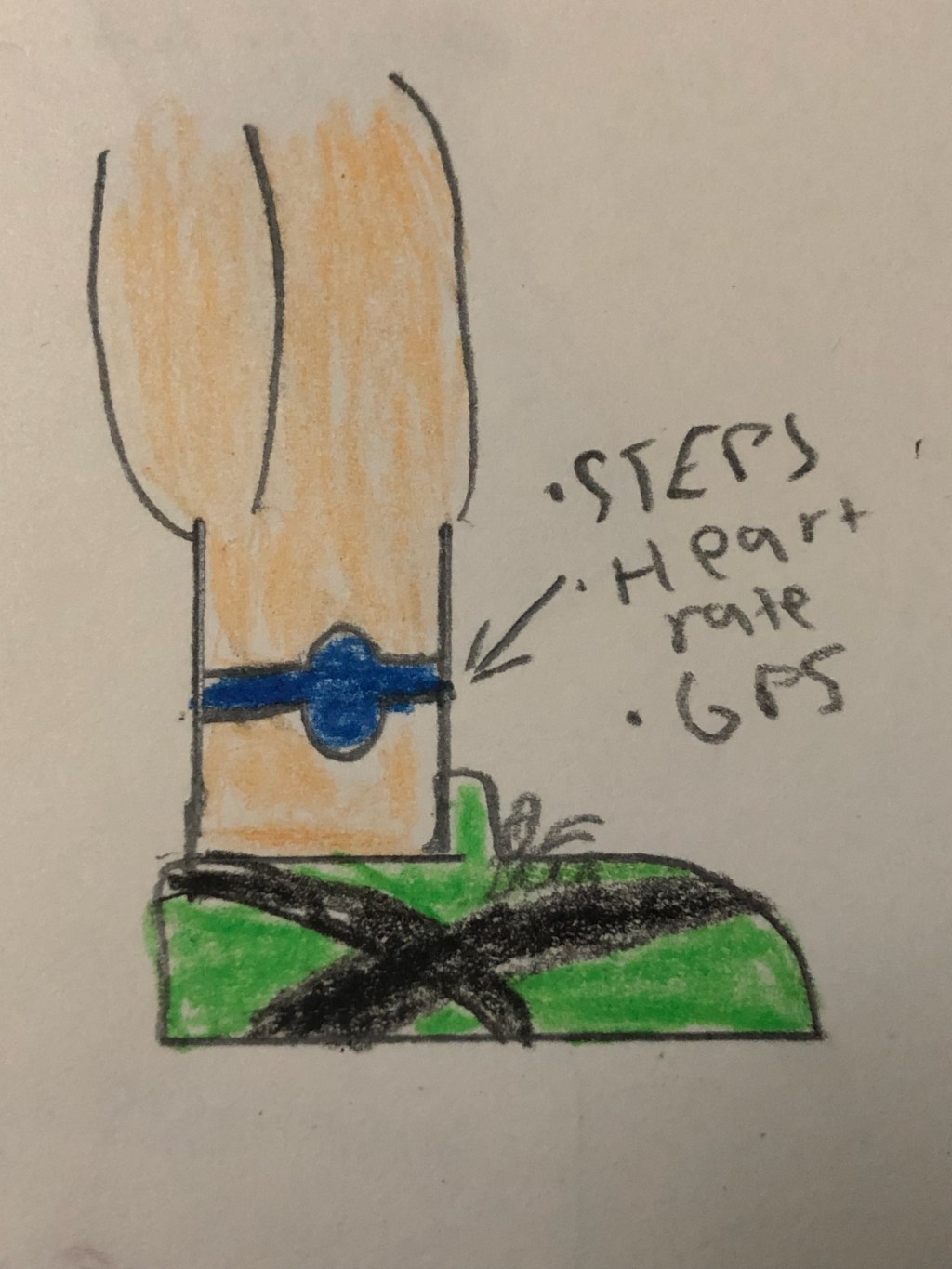
Wearable tech should pivot into making devices designed to be worn around the ankle. Furthermore, the key design feature of this wearable ankle cuff is to make it intentionally difficult to remove. Yes, you read that right, and yes I’m serious. Having a hard-to-remove ankle cuff that is constantly connected to the internet would serve as a great innovation for these tech companies. The ankle is a body part that many people already adorn themselves with jewelry that is not commonly removed, so I’m not exactly pitching a foreign concept. The ankle cuff needs to be designed so that it is easily forgotten about once the user starts wearing it. The constant connectivity of the device will be its main feature; the device will send movement, location and fitness data directly to an app (many tech companies already do this with their watches), however the data also needs to be sold to the highest bidder. The key part is to not allow the app to start displaying the user’s metrics until they opt-in to sharing all of this data (and hence agreeing to its sale while waiving their rights). This language can, again, be buried deep into the terms and conditions of the app.
The physical design of the ankle cuff needs to be narrow and not cumbersome. To keep with its sleek design, the ankle cuff will not have a screen, or even lights for that matter. Unless the user is a skilled gymnast, they will not be able to view a screen from a reasonable position anyways. The screen would just be bulky and interfere with the set-it-and-forget-it design.
Of course, there will be some hardware related challenges to this; that isn’t up for debate. The ankle cuff needs to be able to withstand the forces of high impact movements such as running, jumping, off-road activities and swimming. However, watches are already made with these features, so none of these are hurdles that are too great to overcome.
The key to making the ankle cuff viable is marketing. The set-it-and-forget-it design feature can be marketed towards the busy and on-the-go American who just wants something simple, unobtrusive and low-maintenance. The data-scraping and the corresponding app can easily be pitched to the health-conscious and fitness enthusiast consumer; the same customer who is already buying these gadgets. The lack of a screen-and hence, notifications to constantly check-should easily be spun as a positive. It will allow for their health data to be collected and presented visually within the app, but without the endless notifications that a phone and/or watch would bring. Highlighting that feature will appeal to the consumer that is looking to disconnect a little.
“Dan, these features sound a bit unoriginal” one might say, and they’d be absolutely correct. Currently, Drunk Uncle Sam hoards this very same technology to punish criminals via house arrest to the tune of over 6000 inmates in 2022. Drunk Uncle Sam does not hold a monopoly on innovation (remember, Drunk Uncle Sam doesn’t like monopolies!) and hence there is technically nothing stopping forward-thinking tech companies from doing this. The government, I argue, has no moral basis to keep this potential life-saving GPS technological strap from the citizens.
“But Dan, why would anyone want to give up their smartwatch?” is a rebuttal that I’ll likely get. The smartwatch user is clearly a customer who has money to burn in modern-day America. Therefore, buying this ankle cuff will free up their wrists so that they can buy expensive traditional watches. Their inner shallow consumerist will take over, and they won’t be able to stop themselves from picking up the nicest timepiece that they can afford (regardless of if they can actually read them or not). Perhaps I should pitch Rolex for some seed money; the success of these ankle cuffs would certainly be good for their bottom line!
A feature for future launches of the ankle cuff would be Couples Mode. Under this mode, the ankle cuff would only be capable of being removed if your partner inputs a PIN code into the app on their phone. The marketing pitch will be specific to women; men aren’t typically the most proactive when it comes to their health as husbands need to be not-so-subtly nudged by the Mrs. into seeing the doctor. A sub-feature that can be implemented is that the cuff will vibrate if it detects that the user has been too sedentary, thus prompting the user to get more steps in. Hence, the data for both users will show up in the app; the Mrs. will be able to trust-but-verify that her beer-belly-hubby actually got all of his steps in. Couples Mode will also display all of the GPS data for both users in the app, so the Mrs. can tell if he visited the massage parlor during the day. The marketing pitch will be slightly different for men; the husband will be able to check if his wife’s heart rate was suspiciously high when the pool boy was scheduled to come over. Who knows, these ankle cuffs might just prevent a divorce or two.
Another advanced hardware feature for future releases would be a pressure sensor that detects water flow rates and temperatures. This will become important because when a specific flow rate and temperature of water hits the ankle cuff, the unit will be able to detect that the user is showering. The bathing frequency data can also be sold to companies that sell dermatology products, as well as a whole host of other health products. A similar pressure and water sensor could be installed that can detect submersion at extreme temperatures; data concerning how many users take ice plunges or relaxing hot baths would be interesting to manufacturers of sporting goods and Bed Bath & Beyond.
To quote a great philosopher- “I can’t believe you morons actually buy this shit”…
 Home Page