
Let me regale you a familiar tale; I relapsed. Yep, I once again picked up the controller. This time, I plunked down $550 for the disc-ready version of the PS5 (after cursing Bahamut that I have to pay for a feature that was standard twenty years ago). Why? Because games came out that I actually wanted to play. One of them in particular was Final Fantasy 16. And I gotta say; well…it’s easy to see that Part Two of the Final Fantasy 7 remake clearly got SquareEnix’s A-team.
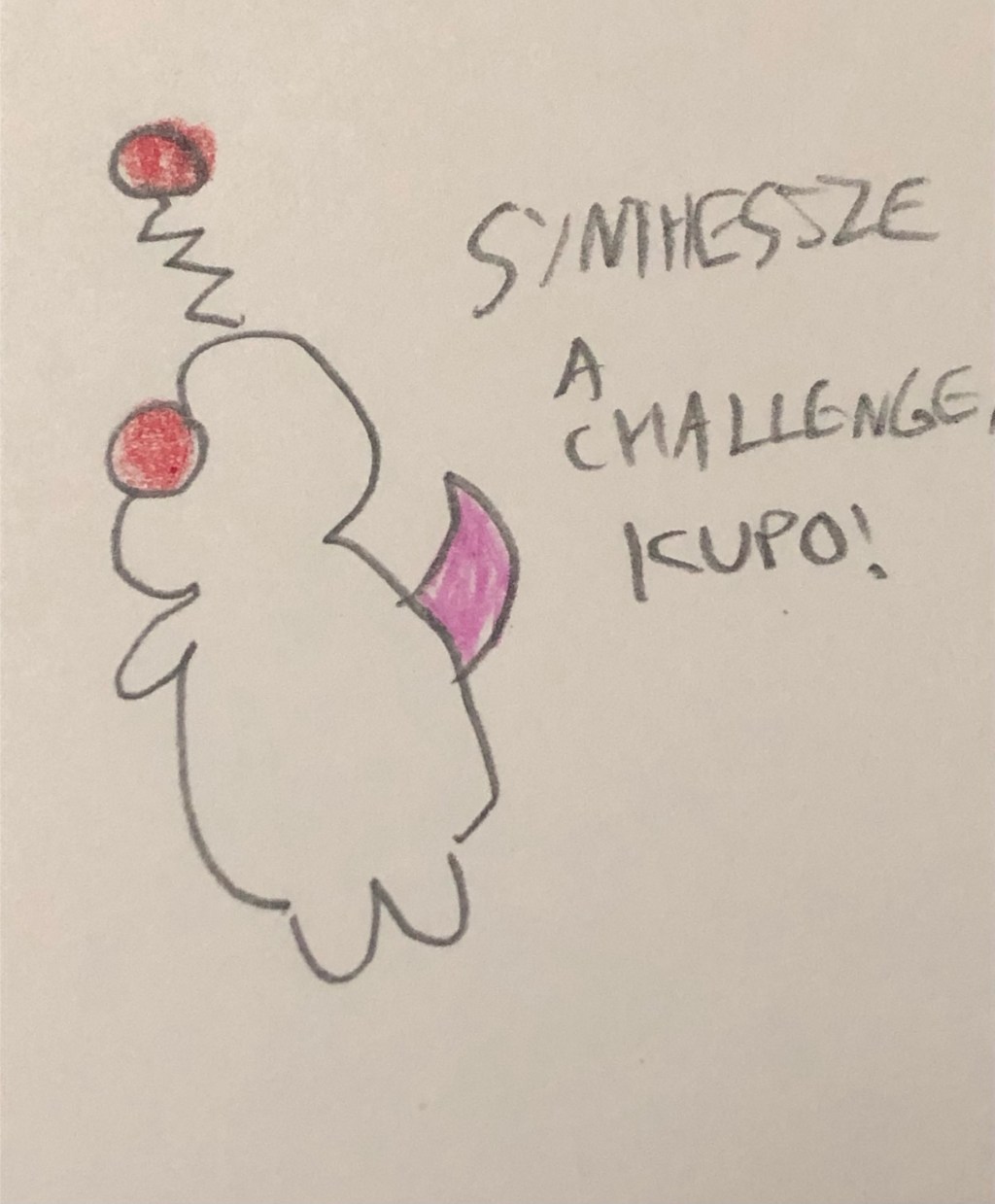
I imagine that sharpened every pitchfork this side of Rosaria; good. For starters, the game provides two difficulties; Story Focused and Action Focused. As the names suggest, the former is meant for players who want to breeze through the game and are mostly just here for the plot. The latter is for players who like a challenge. There’s just one problem; SquareEnix forgot to, you know, add a fucking challenge to the gameplay. Consider that gauntlet thrown…
Like seriously; it’s hardly a challenge when every enemy telegraphs their attacks. Doubly so when their attack patterns hardly change; you don’t exactly need FutureSense to be good at this latest installment. Honestly, the telegraphing was so obvious, it gave me flashbacks to Brave Fencer Musashi circa 19-fucking-97. Final Fantasy 16’s most challenging mode rivals that of a literal children’s game from nearly 30 years ago.
The amount of healing items spawned into the game on Action Focused mode is a bit much. I hardly got hit in most boss fights, let alone in low-level mob encounters. Thus, these were basically wasted. Pair that with accessories that allow for auto-dodging and that spells a recipe for major hand-holding. The fact that the developers think that auto-dodge is a necessary feature in a game where telegraphing is this blatant says a lot about how SquareEnix views their modern player base.
Similar to many RPG’s, the main protagonist travels and fights in a small party. Unlike most recent SquareEnix titles, the player doesn’t control the party whatsoever, save for a fucking dog. (not a joke). Not only can the player not even directly control the supporting party members, they can’t even give indirect or situational instructions ahead of time either. You know what SquareEnix titles allowed the player to do this? Both Kingdom Hearts 2 and Final Fantasy 12, which are both twenty years old. Seriously SquareEnix…what happened to all the innovation?
The enemy AI in this game (again, even on Action Focused mode) is dumb. Like, really fucking dumb. A favorite tactic of mine against large groups of low-level mobs was to lure them close to me and then cast an area-of-effect AOE) attack spell. Another strategic move of mine was to cast a continuous damage AOE spell, then stand directly behind it. I would then simply wait for them to walk right into it. The AI was programmed to constantly move forward towards the player; obvious tornado be damned.
“But Dan, as you’ve alluded to in the past, nuanced AI is hard to do well” a naysayer will bring up. While this is true in a vacuum, video game AI has been a use-case that’s been around long enough for this line of thinking to have been rooted out by now. Don’t tell me the AI can’t figure out the player and develop strategies against them in goddamn 2025 when The GOAT Himself figured this out nine years ago.
The gameplay gets very linear at times, where the player is hardly allowed to explore the grey-scale environment(though vibrant-colored ones are ripe for wandering: #spoiler). Part of the appeal of RPG’s is the freedom to explore every nook and cranny of a complicated map, finding treasures or difficult opponents that the developers hid-in-plain-sight for an adventurous player. Instead, much of the experience is spent being funneled towards an obvious boss fight circa Final Fantasy 10. Sometimes I think that these decades-tenured developers at SquareEnix mailed it in for this edition…
Furthermore, the context of Who’s Who isn’t introduced until twenty-ish hours into the game. As much as info-dumping at the beginning is typically a bad idea, if geopolitics is going to be the focus, then knowing what chess pieces are on the board after the tutorial would’ve been nice. Imagine if aliens playing an RPG about the United Nations didn’t know who Trump, Putin, Xi, and Netanyahu were.
The story? Not much to say about it. After Clive Rosfield (admittedly my favorite Final Fantasy protagonist this side of Cloud Strife) finishes his self-guilt arc,the story leans heavily on the geopolitics of the fictional world. In fairness to SquareEnix, multi-faction geopolitical stories are hard to do well. Hence why SquareEnix hasn’t done it since Final Fantasy 12…and I hardly call that doing it well.
Worst of all? The pacing. My fucking Shiva, the pacing was what made me ultimately quit after 25 hours of gameplay. The game frequently goes from dungeons with boss fights that are relatively engaging (albeit a bit lengthy, predictable and button-mashy) with majorly-relevant cutscenes at the end to devolving into a borderline slice-of-life anime. This peak-and-valley approach to story-telling is a total whiplash of tempo that winds up leaving the player having to slog-through non-action parts of the game. Older and more successful SquareEnix games such as Final Fantasy 8 and Kingdom Hearts didn’t have this problem. It’s as if the executives told the sweatshop Moogles synthesizing the game to shoe-horn fetch quests into the main story, player experience be damned.
One stark example was the second boss fight against Hugo Kupka. Both Kupka and Rosfield transform into their Eikons (what this entry calls summons) and duke it out for a visually stunning multi-round slugfest. Immediately upon returning to the hideaway, Clive is sent on lackey-level fetch quests to have conversations with throw-away characters that the player is never given time to care about. I honestly put my controller down at 70% of the story’s completion; I couldn’t stand the boredom anymore.
“Damn it Dan, all you’ve done so far is dunk on this game. Was there anything about it that you actually liked?” I’m glad you asked! The tutorial showed the player what the main character’s society and culture was like before the events of the main story. This was an element that was noticeably absent from the previous entry, Final Fantasy 15. Returning to the castle twenty hours later to fight Kupka in the throne room, while cliché, was a nice touch.
As for gameplay, I personally enjoyed the level-up mechanic. Each level-up confers increases to base stats in a railroad approach. With that said, the player still has some freedom to unlock abilities via the series-staple sphere grid. It’s a simple-enough system wherein the player doesn’t have to constantly worry about how experience is being applied (looking at you, Final Fantasy 9) but still allows for some player freedom in how to customize Clive’s abilities. Series veterans will bemoan the hand-holding, but this system works, especially for new entrants.
As for the main character himself, I actually kinda like Clive Rosfield. Clive understandably carried some guilt surrounding the vents in the opening three hours of the game, but other than that, he isn’t a total emotional basket case. Is he bland? Sure. Is that bad? Not at all! SquareEnix got this one right.
“So Dan, what was the point of this article?” Besides venting? Mostly to demonstrate that this was an unexplainable drop in quality for SquareEnix. I’ve been an avid player of their games since the 1990’s, thus I’ve seen the growth, depth, and breadth that this industry powerhouse is capable of. Forget about how graphically stunning a game can be made today; just get back to good storytelling, smoother pacing, and letting the player explore.
Final Verdict: I’m glad I didn’t pay full price…
 Home Page