
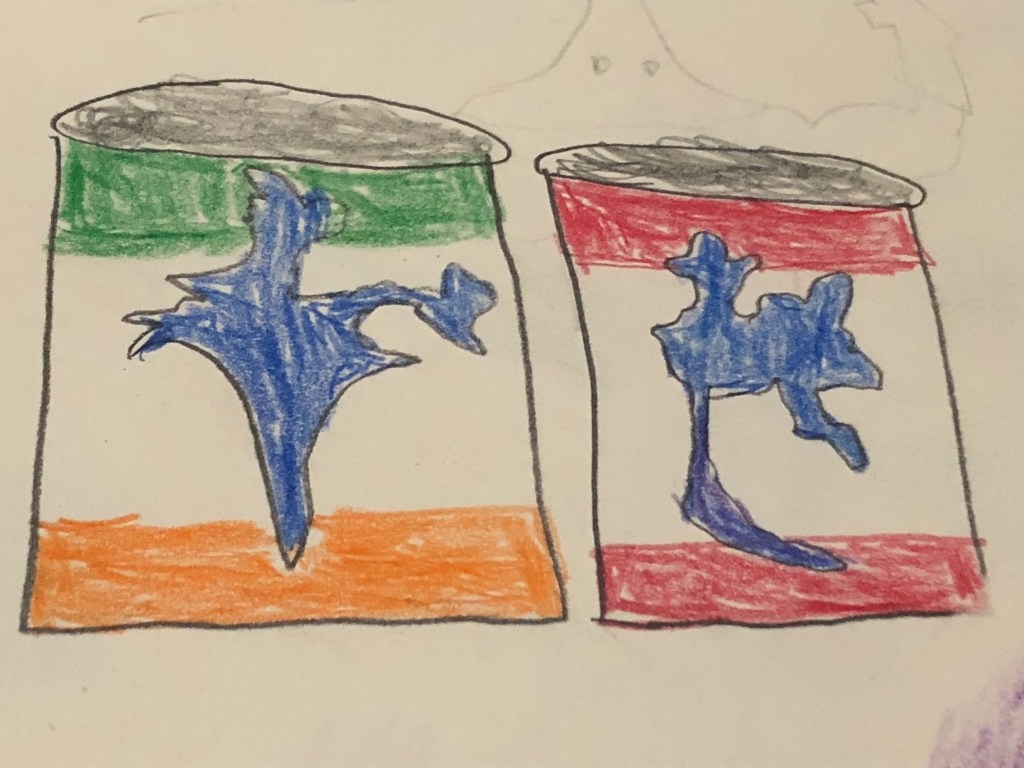
Indian and Thai food have both grown in popularity in the US over the last decade. With that said, they’re noticeably absent from canned good offerings in the local grocery store. Hence being the cutthroat capitalist champion of DEI that I am, I’m absolutely willing to fill this market social void. Sharpen your pitchforks or grab your wallets as I walk you through my latest business idea.
The What
For launch, it’ll be crucial to start with the most recognizable dishes from both countries’ cuisines. For Indian food, this will mean starting off with canned Chicken Tikki Marsala and Butter Chicken. As for our Southeast Asian friends, the original offerings will start with Peanut Chicken and Pad Thai. Various curries can be offered as well, given that both nations are known for the dish.
Of course, it’s not enough to have an initial launch offering; one must think a move or two ahead. After profitability is achieved, Indian food will expand into offering canned Garlic Nann. New England based B&M has offered canned Brown Bread for decades. Thus, the proof-of-concept for canned bread is already there. Furthermore, Chicken Korma, Chicken Vindaloo, and lamb-based variations of previous offerings will be on the table as well. Further south. a Muay Thai fighter will surely kick me in the ribs if I don’t eventually offer Kra Pow!
Desserts from both countries will be canned as well. Black rice with mango will absolutely be canned. An important part of selling that particular product will be to lean into the historical significance of that dish; fit for a king! On the Indian arm of the business, Galub will be canned for consumers. The goal will be to offer the consumer a full meal with our canned offerings. I gotta get that throat-share!
The How
These two countries have a lot of overlap in their cuisines. Recipes and cooking techniques can stay relatively consistent; the biggest variation would be the use of saffron with Indian cuisine and the changing of spices between the two countries. Thus, this is feasible with only one set of large-scale industrial cooking equipment.
While having an online store is basically mandatory in today’s sales environment, that is not going to be my main focus. Instead, brick-and-mortar grocery stores are going to be the target; especially in higher income neighborhoods in coastal cities. The absolutely crucial move is that my products cannot under any fucking circumstances be placed in the canned meat/canned goods aisle. There’s a negative association with being stocked next to SPAM and canned tuna. Instead, it is vital that my products be placed in the International aisle of these higher-end grocery stores. After profitability is attained, then moving into wholesale bulk stores (Sam’s Club. Costco, etc) is the next move. On top of bulk-packs, larger can sizes will be made for these stores; call it Family Style or Shareable! Blue-collar grocery stores will be the final move, signaling a full US market takeover.
Admittedly, my major shortcoming will be that of branding. I’ll need to bring on an experienced marketer; bonus points if they’ve worked in packaged foods before. Why? Simple, I’m not sure if I should keep these two product lines separate or join them together under one umbrella. Currently I think the stronger case is to brand the two lines of products separately, though a case for brand cohesion can certainly be made. If there’s a Campbell’s marketing executive looking for some pre-IPO equity, I’m certainly all ears….
The Who
“Dan, you can’t seriously expect Indian and Thai people to eat this stuff, do you?” No actually, I don’t. Much like how no self-respecting Italian-American home would have Prego sauce or Chef Boyardee ravioli’s in their cabinets, I’m not expecting these demographics to buy my products. They know authenticity, and hence they’ll pass on my product.
“Well, who the hell is actually going to buy your products then?” Fantastic question! I’m targeting Gen X and younger adults. As far as geography, launch will occur in progressive coastal cities and their surrounding metro areas. This is because they’re close to where consumers who are likely to have eaten these cuisines live. I’m willing to take a financial gamble that a Millennial in San Francisco or Boston is far more likely to want Chicken Tikki Marsala than a Boomer in Iowa.
Younger adults are my target audience for another reason as well. Their lower propensity to cook from scratch. By and large, younger adults are far more likely to be convenience consumers. This is overwhelmingly proven by meal prep programs such as HelloFresh and Factor. These meal services are also heavy on cuisines from other ethnicities rather than Americana.
Target Audience
The harried mother juggling a full-time job with child care is a vital target consumer for these products. Unlike Dad, she’ll likely want to have some variety in her diet once in a goddamn while, and my products will absolutely be able to serve that niche. Affordable, easy, a nice change up from typical Americana; why wouldn’t she throw a few cans into her cart on her next grocery run? Hence why grocery store end-caps, especially by the International aisle, will be key to capturing the pink dollars.
Behind many career-oriented mothers in modern-day America is an ex-husband; an under-served yet potentially lucrative market. The kids are likely to have eaten these while living full-time with their cooking-optional mother. Thus, during his one-weekend-per-month, they’re likely to pester persuade Dad into picking up a few cans. There’s a chance that the Old Man will like these cans enough to buy some on a regular basis; the South Asian kick will make him momentarily forget how intense his social isolation truly is.
Finally, preppers/can hoarders are an underrated consumer base. While a generally small community, they tend to spend massively and irrationally. My products offer a definite flavoring advantage over canned tuna and SPAM. Just because the zombie apocalypse is underway doesn’t mean one has to sacrifice taste! Reaching this consumer will require an unconventional marketing approach; stocking these at military surplus stores is a must. Ditto for outdoor sporting stores, as well as setting up booths at prepper conventions and gun shows. Once profitability kicks in, getting a regular ad read on the Tucker Carlson show would be the ultimate marketing goal; he has preppers and conspiracy kooks basically eating out of his hands.
Send venture capital today!
 Home Page