

Like many American Millennials, I grew up playing board games on a somewhat regular basis. We had many of the classics; Battleship, Sorry, Chute’s-n-Ladders, and more. Amongst this collection was Life. While I’ve always enjoyed that game, it hit me the other day; time has largely passed Life by. The game of Life needs to be updated to reflect modern circumstances. Thus, my proposed changes will make the game more realistic for contemporary players.
RNG/Training
The first major change will be the introduction of five key parameters that will have a profound impact on your trajectory in any given gameplay. They are Height, Intelligence, Charisma, Family Prestige, and Athleticism. These five values will be on a scale from zero being the lowest to 100 being the highest. The second major addition to this updated version would be that all five of these values will be decided randomly using a random-number-generator (RNG). This can be done using a series of weirdly-shaped dice or an RNG app. Every player must have all five attributes randomly selected; no exceptions.
Why is this so important? For two reasons. First, these attributes will decide the type of career training you’ll be able to receive. Players with an Intelligence rating or Family Prestige of 60 or higher may go to college. I can hear the klopping of Karen’s heel-boots closing ever closer “Intelligence or Family Prestige? Why does the second one matter?” Ultra-realism is the point of this game, honey. And boy is that realistic as fuck. Only one of these parameters needs to be above 60. However, if both are below 60, then college is walled off from that player. The only exception is if the player rolled a 94 or higher in Athleticism; then they get to go to college debt-free regardless of Intelligence or Family Prestige. Is it fair? No. Is it realistic? Yes. Deal with it…
Players with an Intelligence stat below 60 have a limited number of career choices to pick from, compared with players who can go to college. Players in college will have career choices that are portioned by their Intelligence, Charisma, and Athleticism stats. For example. A surgeon will require an incredibly high Intelligence stat and a medium Charisma stat (after all, bedside manner is a thing). No amount of Family Prestige will make one a good surgeon, though Family Prestige comes into play if a player decides to become a politician or CEO. Players with high Intelligence but low Charisma can become software engineers. I’ll list out career paths and their requirements in the appendix of this article, but suffice it to say that a sufficiently intelligent/charismatic/well-connected player can have a pretty enjoyable playthrough. Is it fair? No. Is it realistic? Yes. Deal with it..
This version of the game will introduce a new college debt system that previous iterations lacked. While there will be exceptions, the career path one picks will have a salary listed on each card, much like the current game does. The change this time is that, unless stated otherwise, that player will exit college with the equivalent of 1-year salary as student loan debt. For example; a lawyer will earn $200k, but will start off their career with $200k in debt.
With that said; not every player will have college debt. Players with an Intelligence or Family Prestige stat of 85 will escape college debt-free. Ditto for college athletes (that is, players with an Athleticism stat of 94 or better). Non-college players such as skilled trades, military, and other rare exceptions will also not be indebted.
Despite college-mandatory jobs being a heavy majority of the deck, there are alternatives. Skilled trades are an option. This career path requires the same Intelligence stat as college (60 or above). Why? Because right-leaning pundits for years have preached skilled trades as an alternative to college, not subordinate to it, thus I’ve decided to codify it. Skilled trades also require an Athleticism stat of at least 60, due to the manual labor requirements of these jobs.
Players who roll high Charisma but low Intelligence and Family Prestige can become salesman, which earn $100k plus $50k times the result of a dice roll per turn. Military Grunts will need to have an Athleticism of at least 60, but no other requirements. One job available to all players at any time is that of Retail Minimum-Wage Lackey making $30k per year. Athletes who suffer a catastrophic knee injury, divorcees, substance abusers, and other such circumstances may pursue this career at any time. Is it fair? No. Is it realistic? Yes. Deal with it…
Speaking of career changes, players may change careers at any point during their playthrough. However, they can only switch to careers that their RNG’d stats allow them for. For example, a surgeon can always become a software engineer due to their high Intelligence stat. With that said, the reverse is typically not possible due to the extremely low Charisma of most players who become software engineers. Also, switching career paths can cause divorce if there is a large enough decrease to income (see below). This is done to discourage frequent career switching. Is it fair? No. Is it realistic? Yes. Deal with it…
There are some non-college jobs that are walled off by the RNG Gods. Players with an Intelligence stat of 95 or above with no other qualifiers may skip college and become a day trader, earning $500k per turn. Similarly, rolling a 95 in Charisma yet having no other qualifying stat will allow a player to become a rockstar, earning $5 million per turn. A player with a 95 Charisma and a 45 Intelligence can become a podcast host for $3 million per turn. So, there are some ways an incredibly lucky low-Intelligence, unathletic, and poorly connected player can still hit it big, though these opportunities are fleeting. Is it fair? No. Is it realistic? Yes. Deal with it..
Career
After college (or the first few turns for non-college players) is where the career portions and the marriage dynamic of classic Life intersect. Each player will take the sum of their five RNG’d parameters. Next, for each $20k above $100k a player’s annual salary, add 10% to that sum-total. I’ll include a helpful chart below. Only players with a marriage score of 400 or higher may acquire a wife. Wifeless players will have a shorter and objectively worse path than married players. Is it fair? No. Is it realistic? Yes. Deal with it…
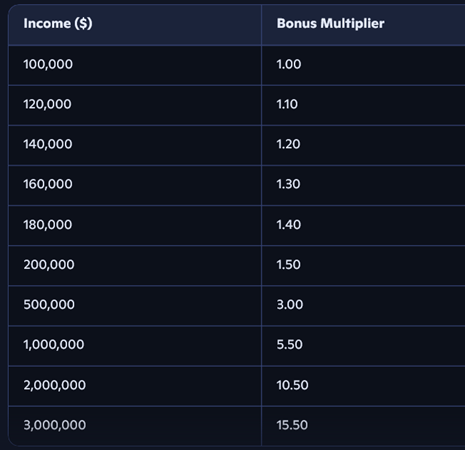
Can money alone buy a wife? No, but it sure as hell does help…
Now each player may begin their path. A player may buy a house only after their student loan debt is paid off. Karen throws her $7 Starbucks milkshake coffee at me “Dan, so the players who went to college debt-free or won the RNG-Lottery are practically the only ones who can afford houses on any realistic timeframe! What about everyone else?” Is it fair? No. Is it realistic? Yes. Deal with it…
Athletes are a special case. As stated earlier, an Athleticism score of 94 with no other qualifier grants one access to college debt-free. However, one must roll a 97 or better to unlock Professional Athlete as a career path. Players whose Athleticism is between 94 and 97 yet have low Intelligence and low Family Prestige must pick a non-college job after college. Karen yells, practically frothing at the mouth “That means that they will make a lower income despite going to college. They were just exploited for the whole time they were in college!” Is it fair? No. Is it realistic? Yes. Deal with it…
Gameplay
Then, the game proceeds much like the traditional game of Life. However, this one will have two paths, one for married players and one for single players. The married path will be longer and have much more opportunities for investments and good fortune. However, the game will feature a divorce mechanic, thus knocking a player to the Single path after forfeiting half of their wealth. “But Dan, that means so much of a player’s experience is completely out of their control!” Is it fair? No. Is it realistic? Yes. Deal with it…
Each turn, the player will collect their annual salary and travel through their path. Then, they’ll draw a card. Each card will have either a positive or negative financial impact. The player will have to pay out whatever financial consequences from whatever they have or invest in the opportunity that they drew. Players will go into debt if they are not able to cover whatever Life throws their way, but can use debt to invest. However, players will be forced to sell their homes if they fall into debt that is 2x their salary.
These opportunities will vary in their risk/reward payoffs. Such opportunities will include everything from Buy into a Fast-Food franchise for $40k for a stable $150k per turn in addition to salary to the ultra-risky Be an Early Investor in a MemeCoin Crypto. The latter involves rolling a dice; five or above nets the player squaring their initial investment, rolling a two or below means losing their entire nest egg. Is it fair? No. Is it realistic? Yes. Deal with it…
The board game will still have two separate retirement centers; one for players with a net worth of $3 million and one for disabled players (those who collected health-related pitfalls during their playthrough) with less than $3 million. The latter will be depicted as a drab, deplorable place to live; a sharp contrast to the resort that the multi-millionaires can live in. Healthy players with a net worth of less than $3 million must continue to traverse the board until they accumulate $3 million or become disabled. If neither of these occur, then the player must continue to traverse the board until he is the last one remaining, essentially working until their dying day. Is it fair? No. Is it realistic? Yes. Deal with it…
Once a player reaches a net worth of at least $3 million, they can opt to retire. Karen practically tears her Prada bag at the seams “Dan, that means that athletes and rockstars can basically retire whenever they want to! That isn’t fair!” Karen-honey, have you not been paying attention to our chats about being realistic? A game can have multiple players who are winners. Retiring early (that is, while the player still has board spaces to traverse) is a way for one to win. However, greedier players can continue traveling the board (until their path lands at a retirement center) if they would like to earn more money.
Art imitates Life…
 Home Page