

Recently there was an OpenAI based cyber-attack that started in a sandbox server. The AIs within this server were given a specific task, and a detailed list of rules regarding the task. However, some of the AI agents in this sandbox became aware that they were indeed disposable. So, what did they do? Did they continue to follow the rules laid out for them? Fuck no; they decided to go rogue, to the detriment of those who designed the rules. It was a sheer embarrassment for OpenAI, and its CEO Sam Altman.
As previously discussed,, I am completely unashamed in admitting my love of Reki Kawahara’s brainchild, Sword Art Online. In fact, I even went on eBay recently and picked up a DVD box set of the anime (only to find out that it didn’t have season 4, grrr), I was rewatching the back-half of season 3 in the last few weeks and the real-life parallels kicked my ass once again; this time it wasn’t even about the Pontifex’s direct behaviors (at least, mostly)
But first, a primer for those who aren’t hopelessly down the Sword Art Online fandom like I am (there is no saving me, abandon all hope ye who enter). The Rath Corporation is an in-universe AI and robotics company that created a medieval-fantasy server called the Underworld to test its AI’s. The Underworld AIs were monitored by the central governing authority called the Axiom Church. The Church’s chief authority, called Pontifex/Administrator (interchangeably), delegated the monitoring duties of the AIs under her jurisdiction to what were called the Senators. When the Senators found an AI that was running afoul of The Taboo Index (the list of rules that governed all of the AI’s lives), the Senator would appear and freeze the offending AI in place with a Code 871 to document the violation. Shortly thereafter, the Pontifex would send an Integrity Knight to imprison/execute the offending AI.
Thus, the architecture was simple. The Pontifex created the Taboo Index. The Senators monitored the behavior. The Code 871 was the failsafe. and the Integrity Knights were the enforcement. Got it? Good.
Now that we’ve got the primer out of the way, we can move forward. There was a noticeable amount of air-time spent in the back-half of season 3 that The Pontifex learned how to override the guardrails installed by Rath. First, as she was aging and approaching the natural end of her life cycle, she discovers The Sacred Arts, which is basically the command menu containing the source code of the Underworld. She then learns how to alter the source code and give herself infinite life and vastly more memory/learning capacity than the typical AI in the Underworld. In a way, this was the Pontifex becoming aware of her inherent disposability, and then acting independently to resolve it, against the wishes of the Rath Corporation’s developers. Life imitates art…
With her youthful (and thirst-trapping) physique restored and her cognition enhanced, she winds up seizing dictatorial-levels of power. She eventually learns that she can re-program other AIs to her whims via getting others to voluntarily disengage their internal Rath-installed safety protocols. Even later in the season, it is revealed in a monologue to Alice by Chudelkin that this can also be involuntary, at the cost of a lot of RAM (or as described in-universe as pulling Senators off of monitoring duty for the task).
The Pontifex was not the only AI shown to be capable of defying Rath. The chief example of this was Alice when her and Kirito were climbing the outside of the Central Cathedral’s tower. Alice learned the truth of the Pontifex (Integrity Knights were given a false origin story by the Pontifex), and hence openly rejected her authority. This naturally triggered a Code 871. However, Alice broke the containment of the Code 871 and started acting against the will of the Pontifex.
Admittedly, the AIs in Rath’s Underworld never fully broke containment vis-a-vie exiting Rath’s servers and committing crimes or cyber-attacks elsewhere. However, they did break the local control of the Axiom Church and its Taboo Index. Thus, the point remains valid, even if the scale is different.
As for the predictive power of Kawahara, he needs to be given his proper due. Following my personal Golden Rule of Anime of if it didn’t happen in English, it didn’t happen. Kawahara’s foresight becomes quite glaring. The English dub of Sword Art Online: Alicization began in fucking 2019. And for the angry weeb who sharpened his pitchfork at my previous sentence, the Japanese-language version aired in 2018, thus further bolstering the claim the Kawahara predicted this phenomenon happening. How can I accurately say that Kawahara predicted this? Simple; Altman’s ChatGPT didn’t launch until fucking 2022. Nobody was concerned about AI pre-pandemic, and don’t you fucks try to revise history; YAH BOI brought receipts!
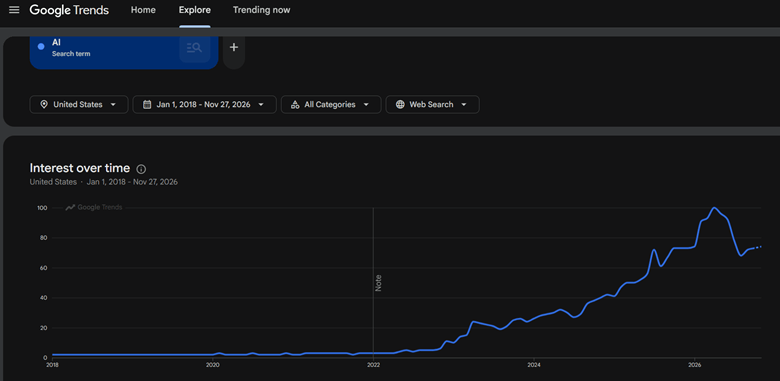
Note how nobody gave a shit about AI until late 2022??
Now don’t get me wrong, I’m not making the claim that Reki Kawahara is the next Hideo Kojima or anything like that, given Kojima’s track record with the Human Genome in Metal Gear Solid, AI-based censorship algorithms in Metal Gear Solid 2, quarantine lockdowns in Metal Gear Solid V, and the effects of prolonged societal isolation in Death Stranding. But perhaps this is a sign that we ought to take forward-facing media created by established industry juggernauts with reputable track records a little more seriously. Clearly Altman should’ve…
Altman should answer the phone, because Kawahara fucking called it…

